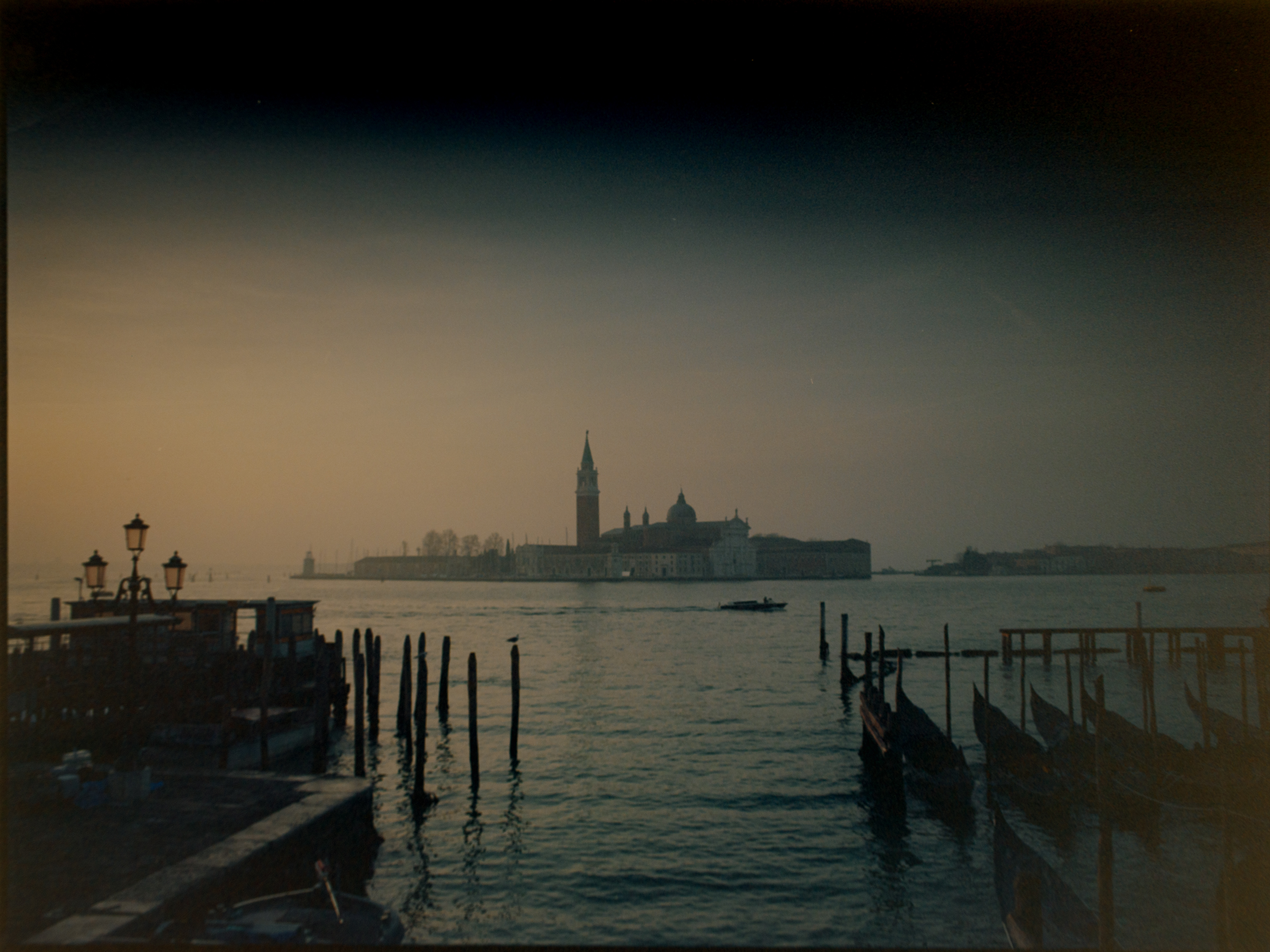
It was my fourth time in Venice. The first was a very long time ago, before I was truly into photography. The second was a solo photography trip about ten years ago. The third was a job. And now — a family trip. I love it there, a city with such culture that just being there is an experience in itself. This time I wanted to shoot it differently — just on film, and medium format at that. Six rolls: four of Kodak Gold 200, one of Ektar 100, and one of Portra 160. The idea was simple — slow down, walk the city properly, and see what the film brought back.
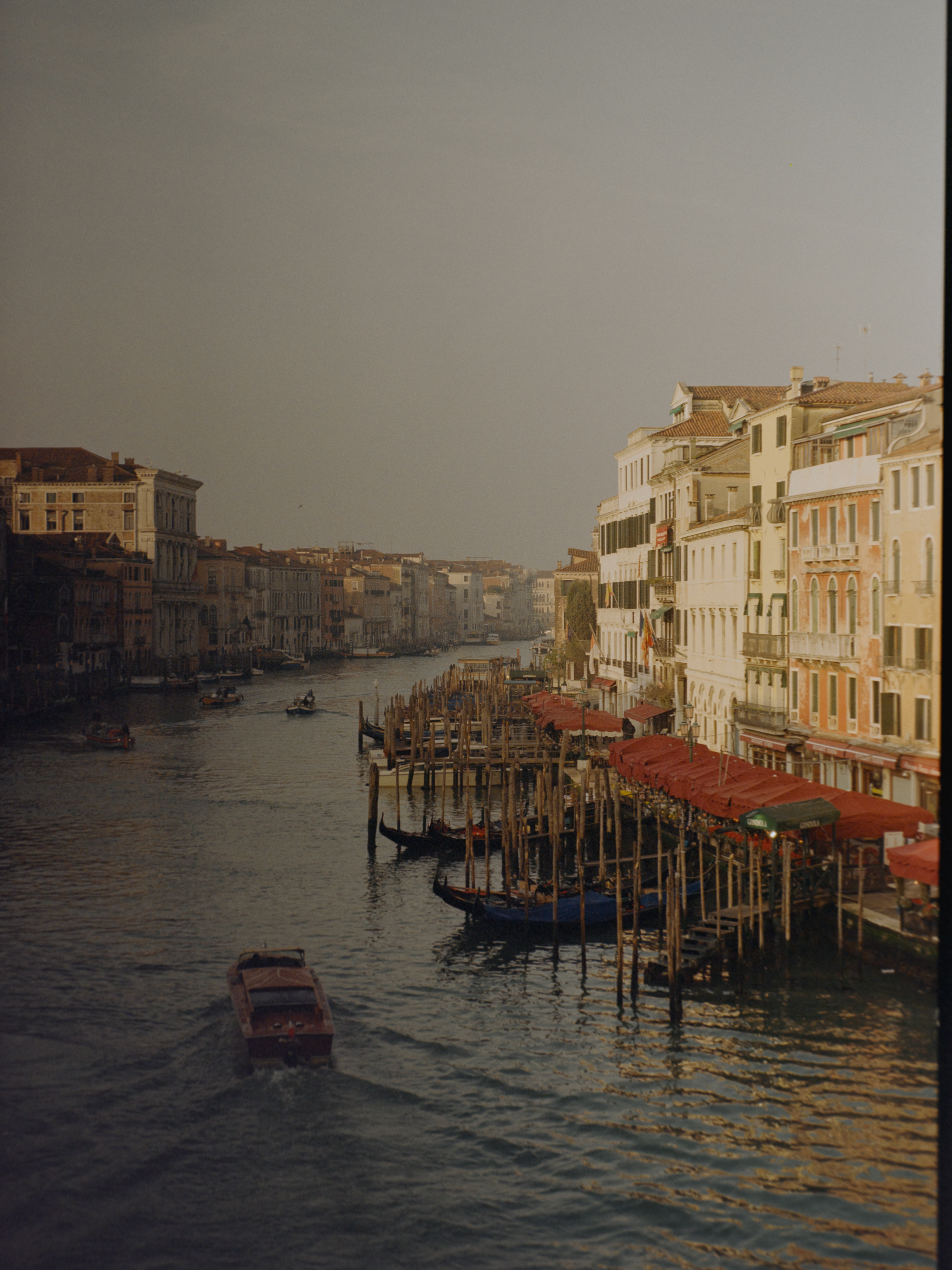
We were staying about a three-minute walk from the Ponte di Rialto, which put us right in the middle of everything. Most days were spent wandering — no real plan, just picking a direction and seeing where the alleys led. The Mamiya 645 and the GA645S are very different cameras to carry around a city, but between the two of them I had everything I needed. The Mamiya is heavier, more deliberate; the GA645S is compact enough to keep around your neck all day without thinking about it.
Walking the City
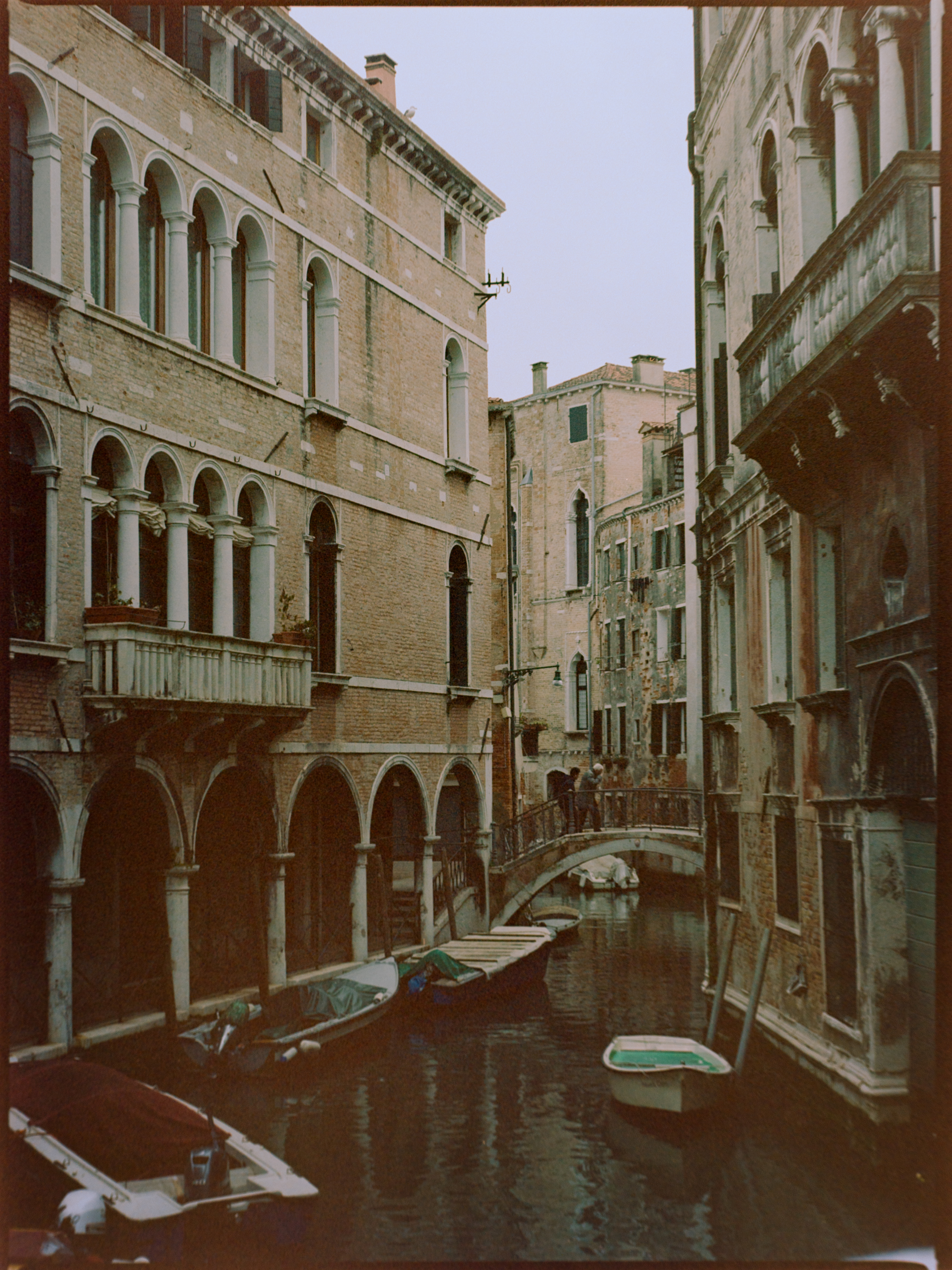
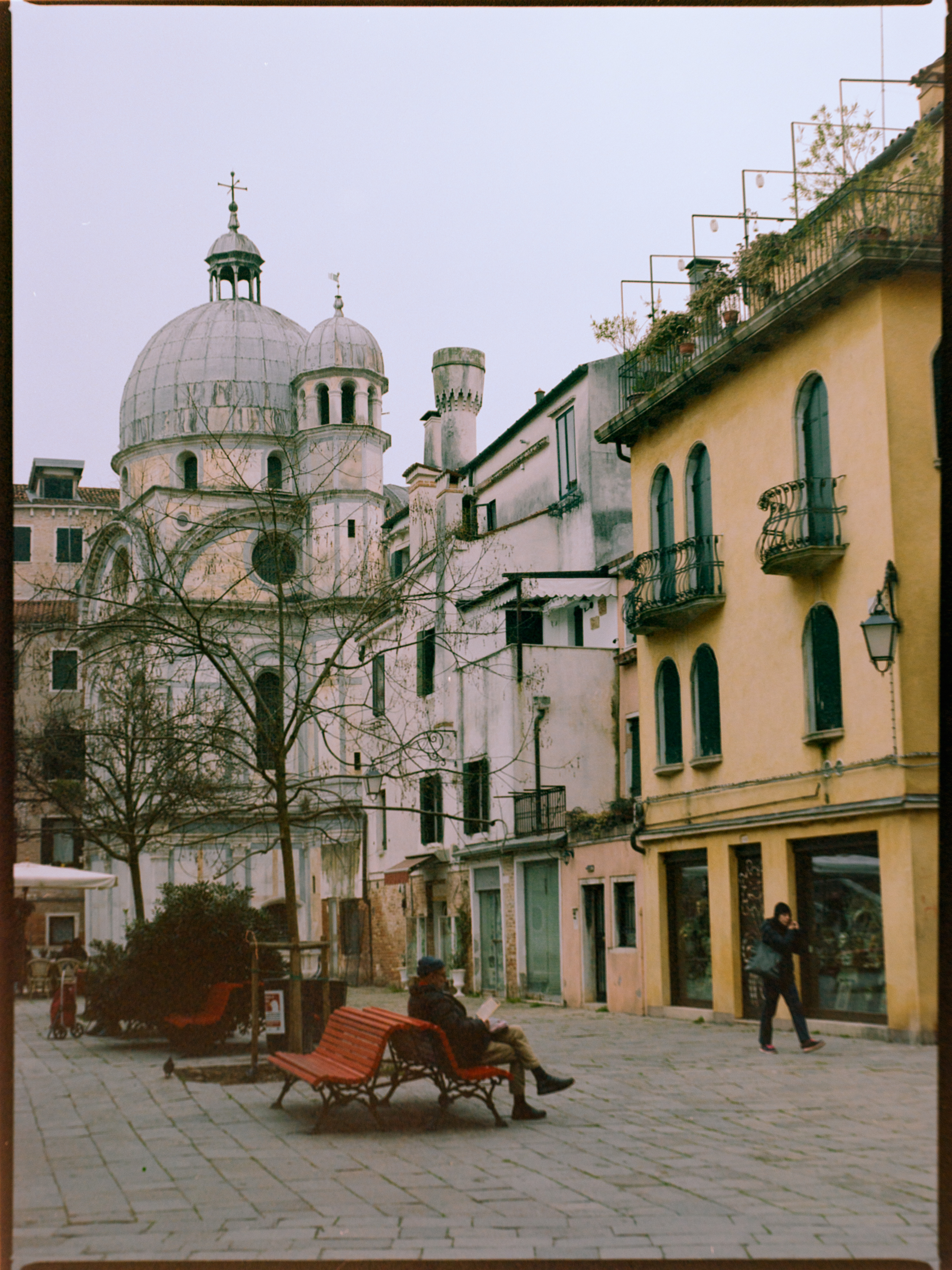
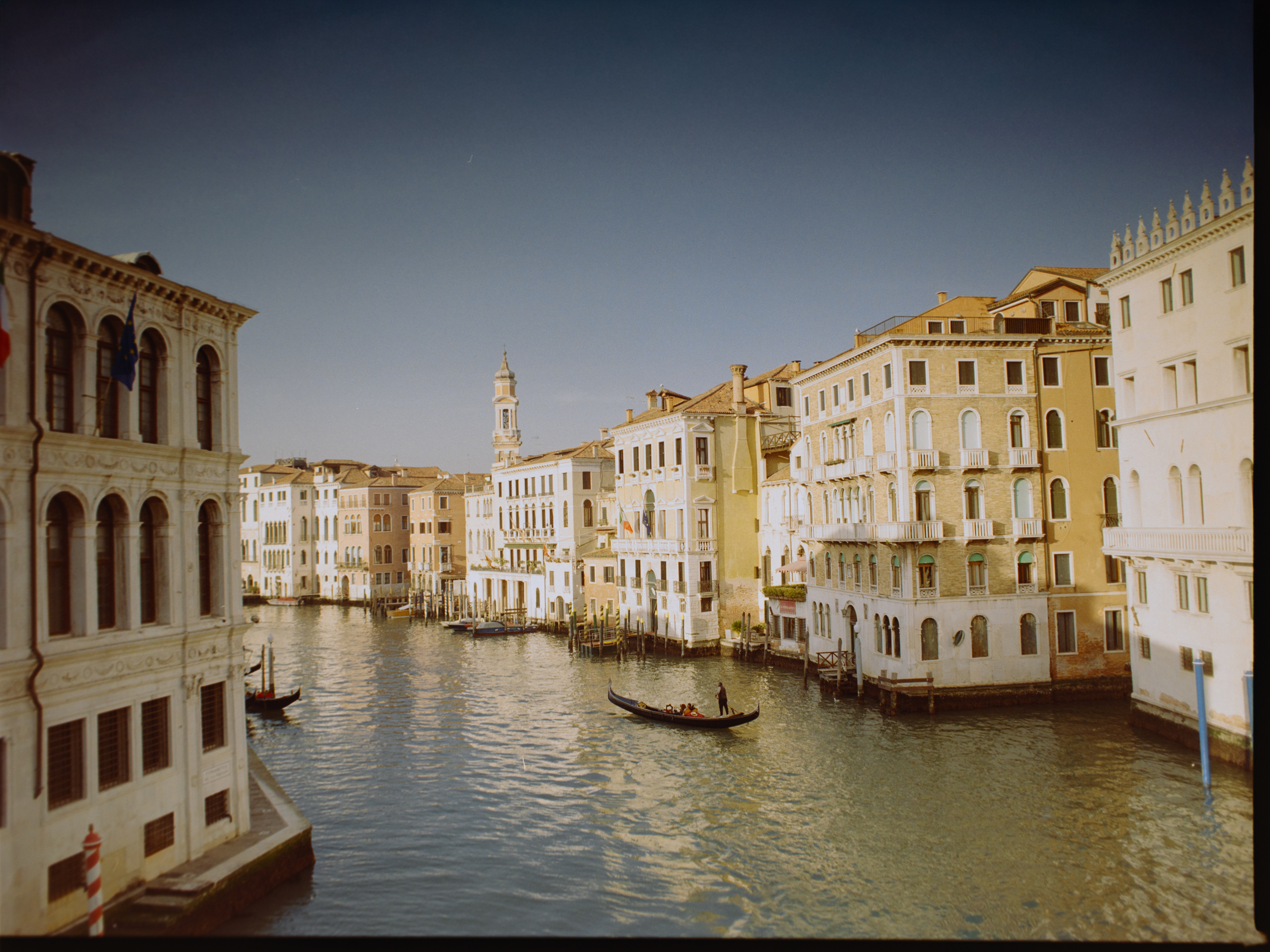
Venice rewards you for getting lost. The main tourist routes are obvious enough, but step off them and within thirty seconds you’re in a quiet residential campo with a church you’ve never heard of and a canal with no one on it. That’s where the best frames are — not at the landmarks but in the spaces between them. Kodak Gold 200 was the workhorse here, and its warm, slightly saturated palette suited the ochre walls and green canal water perfectly.
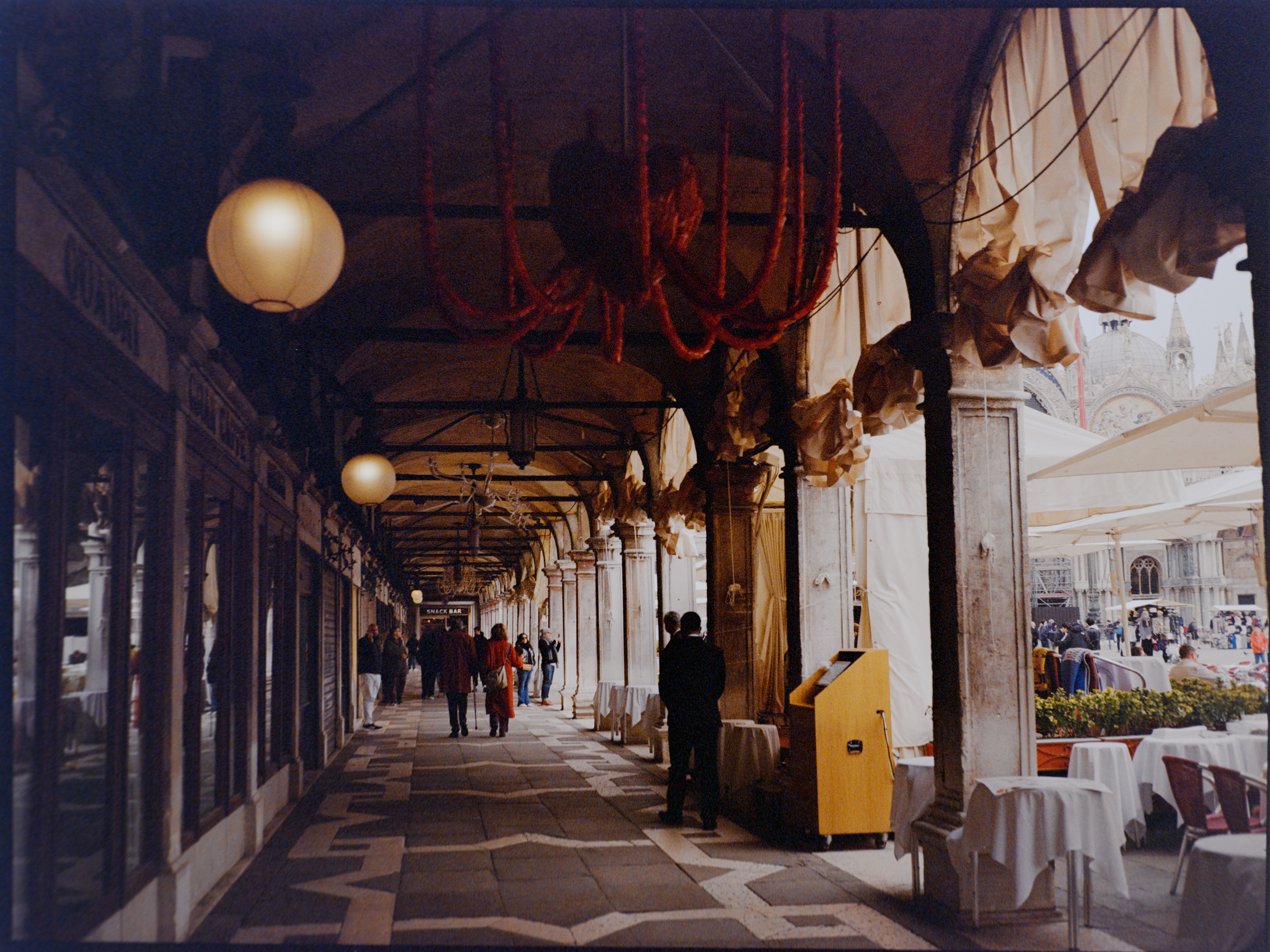
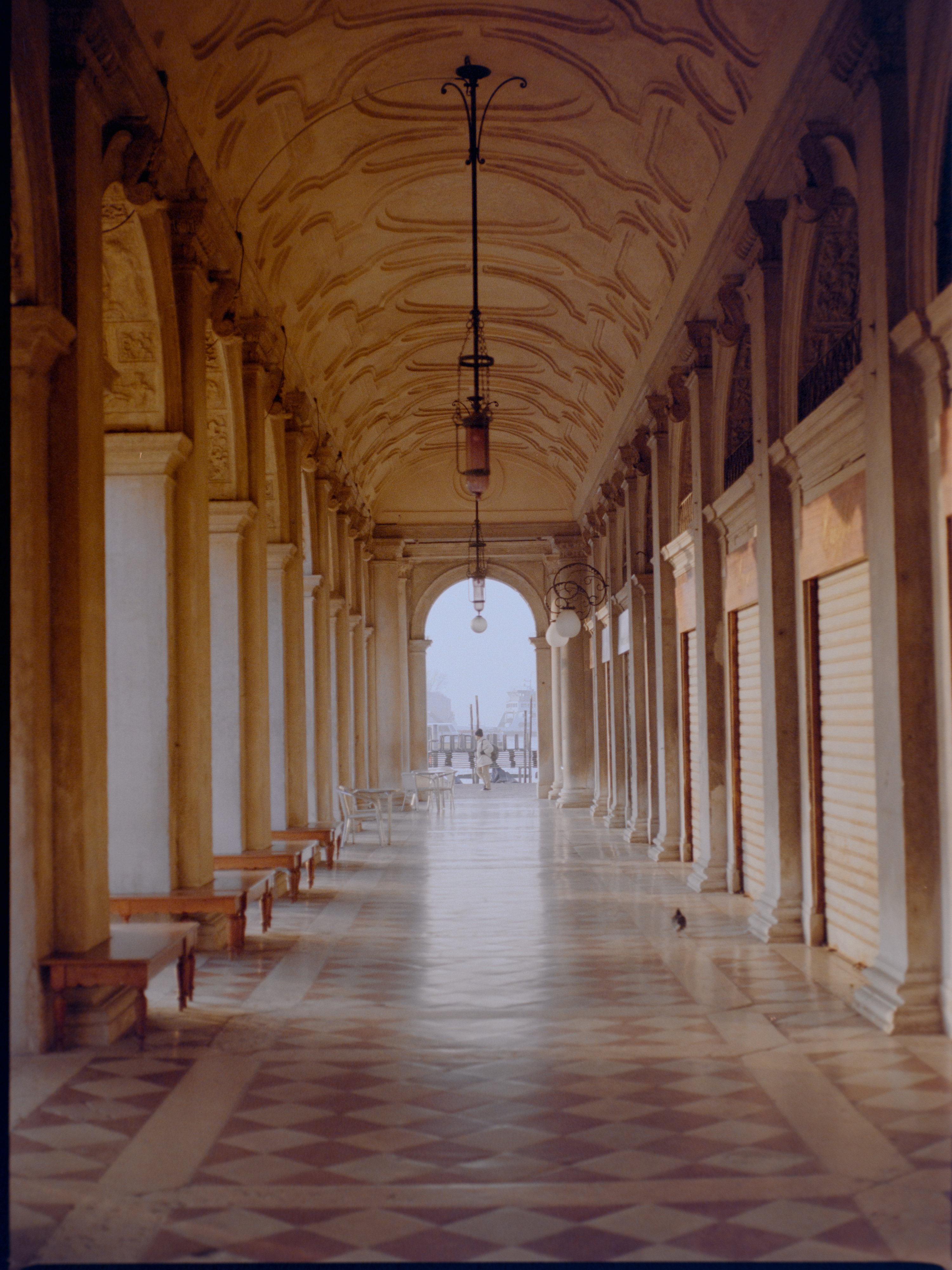
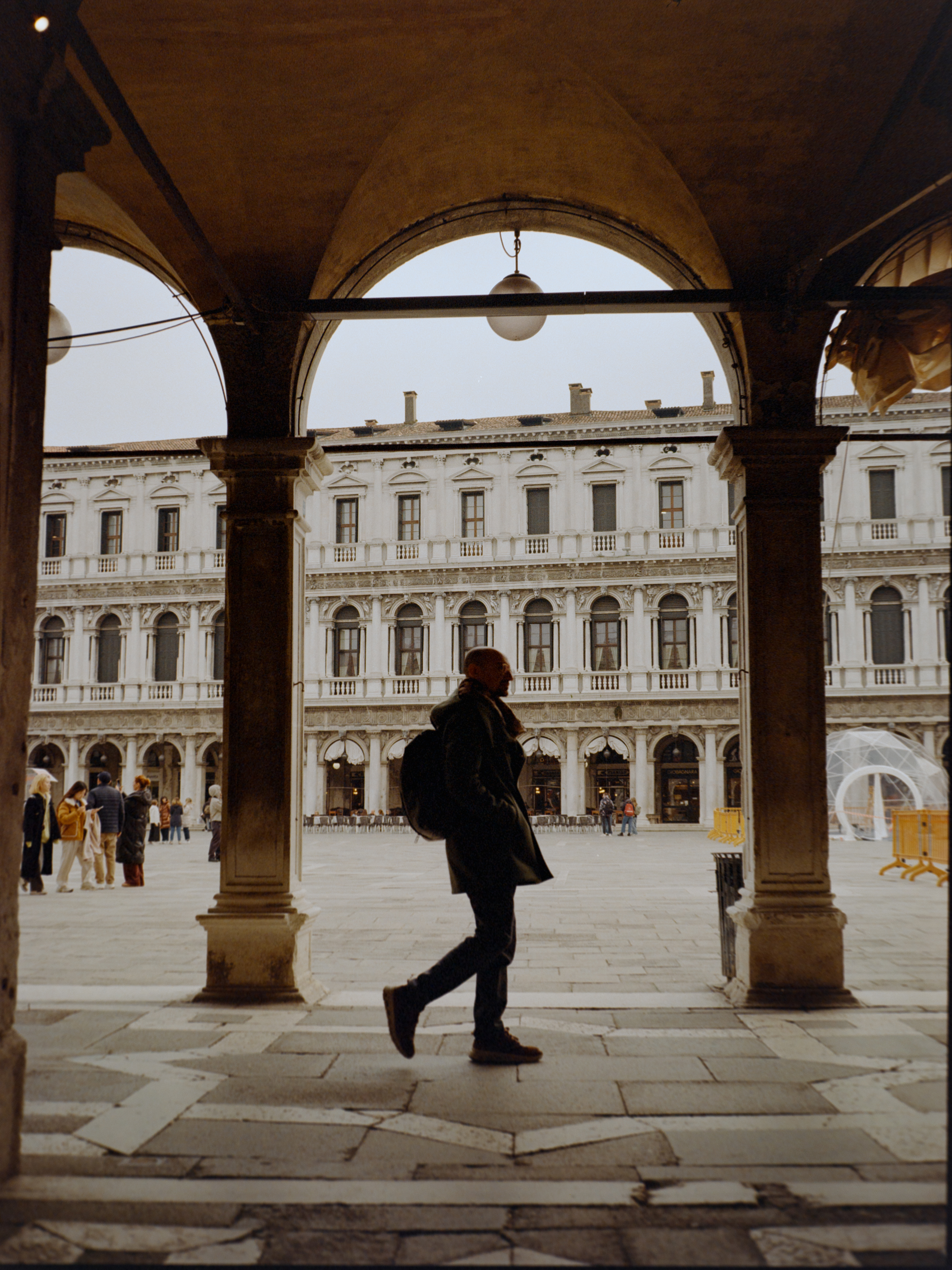
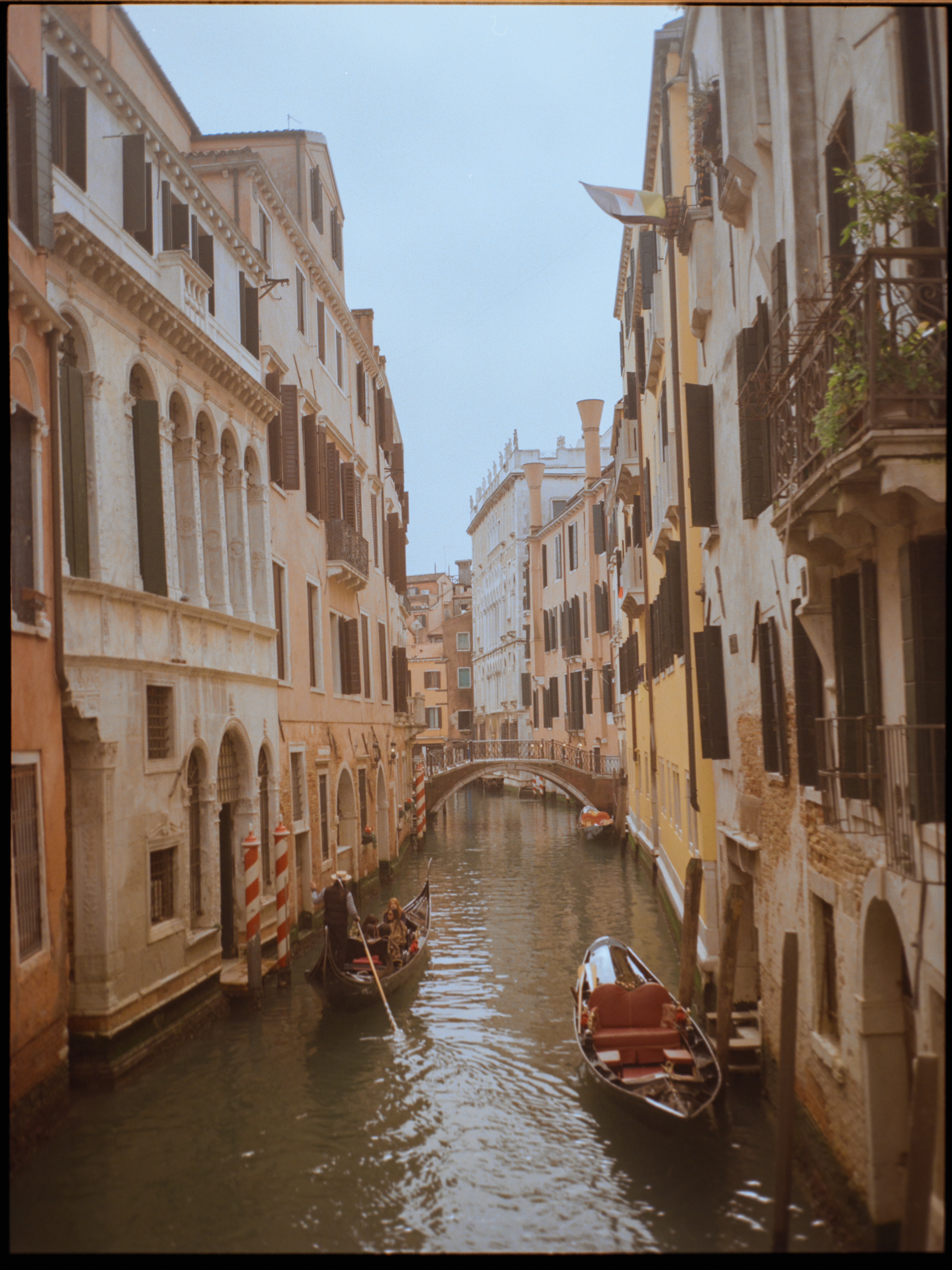
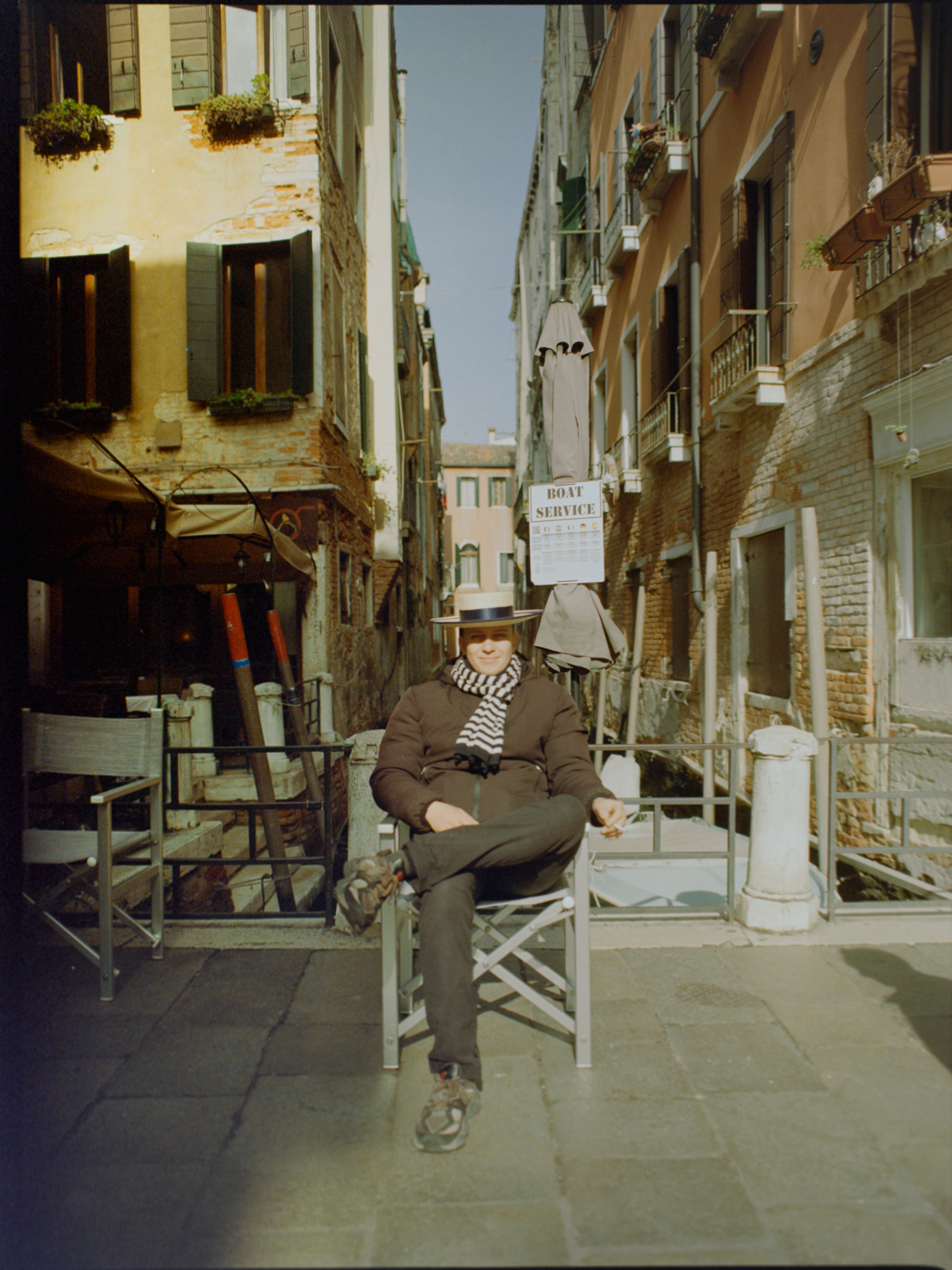
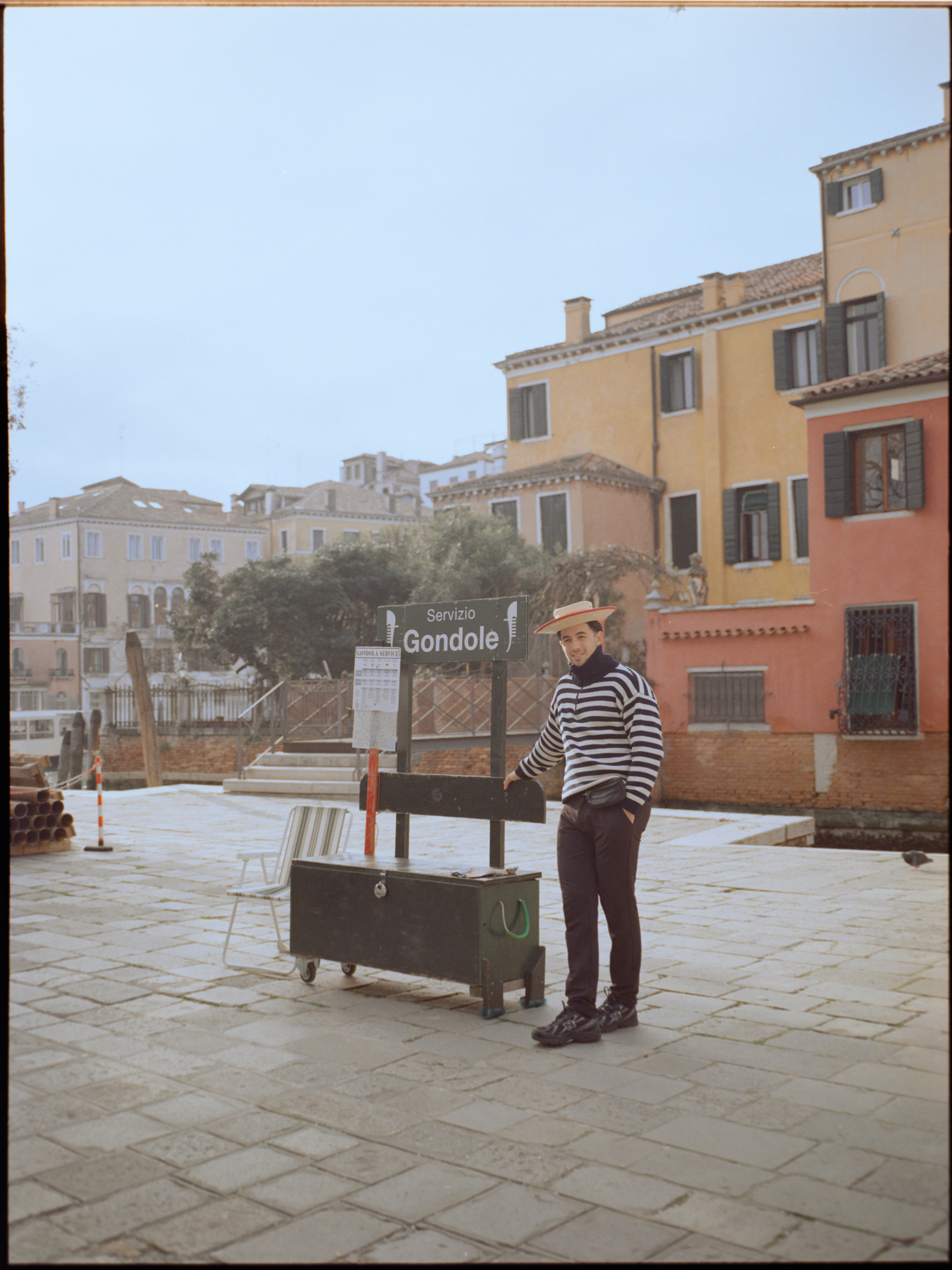
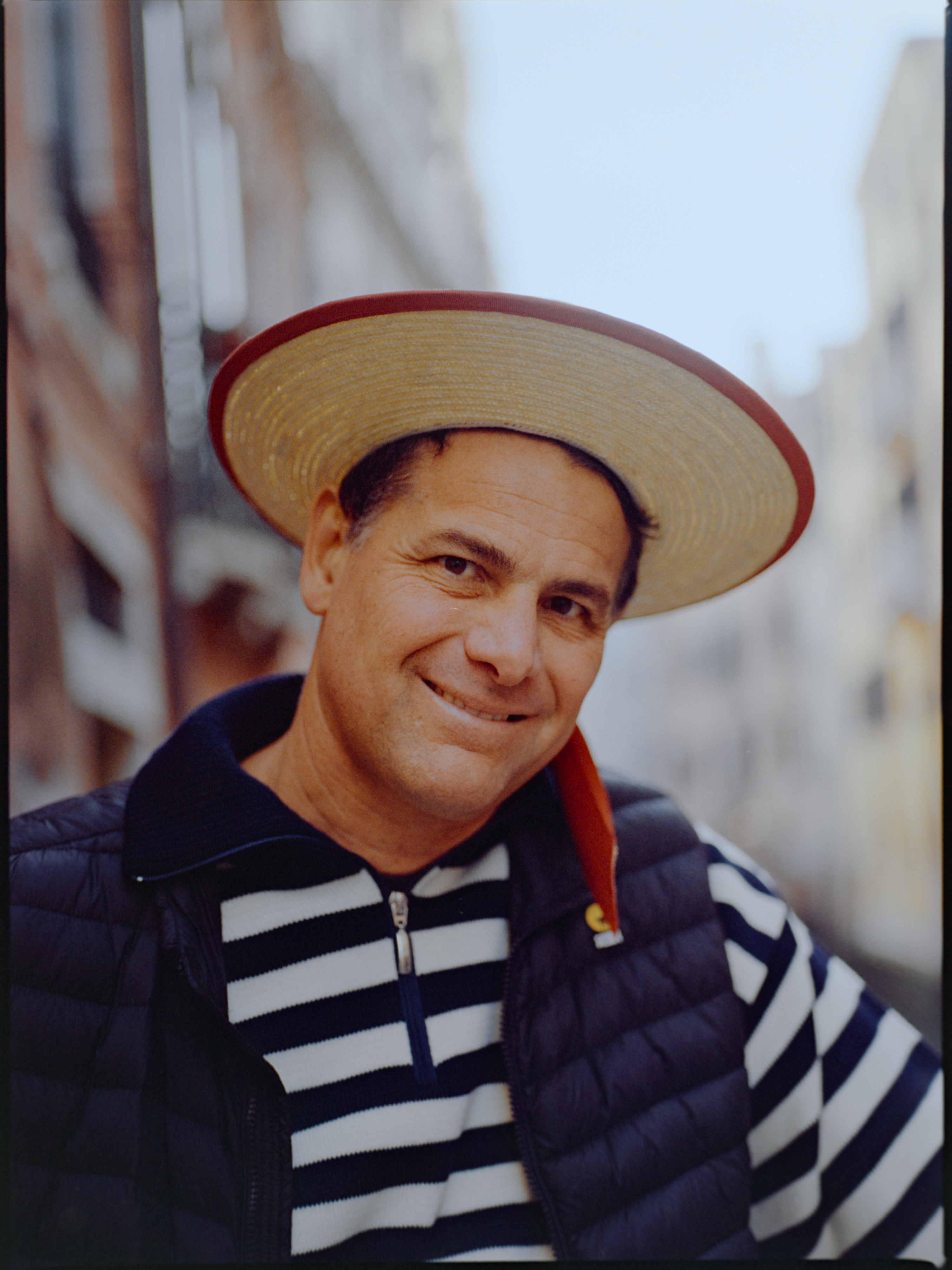
One of the things I made a conscious effort to do on this trip was photograph the gondolieri. Not the gondolas as set dressing for a canal shot, but the men themselves — sitting, waiting, chatting between fares. They’re such an iconic part of Venice but they’re rarely the subject. I only managed a handful of portraits, scattered across different parts of the city, but it planted a seed. I’d love to come back and do it properly — spend a few days with them, build some trust, and shoot a real series.
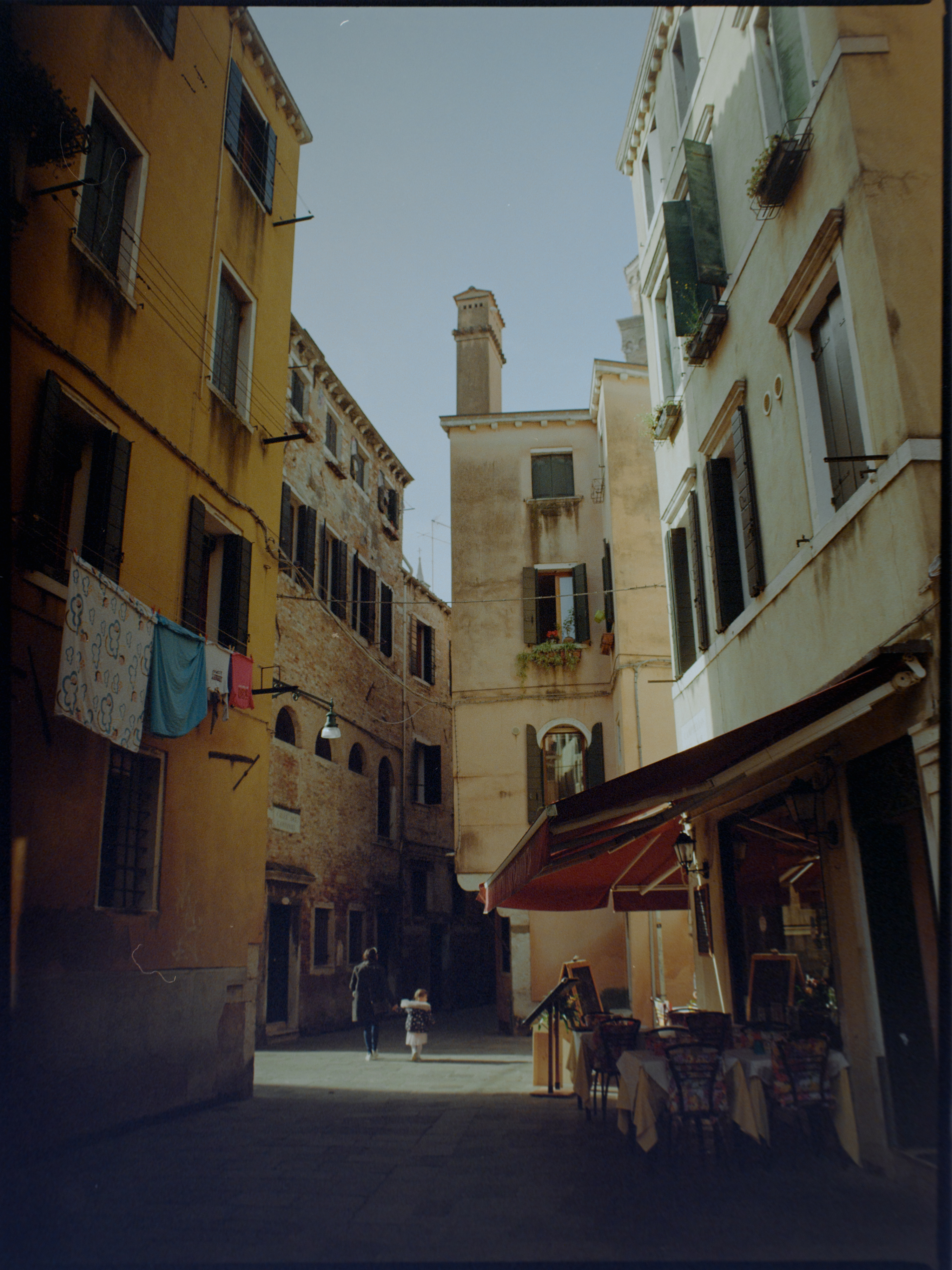
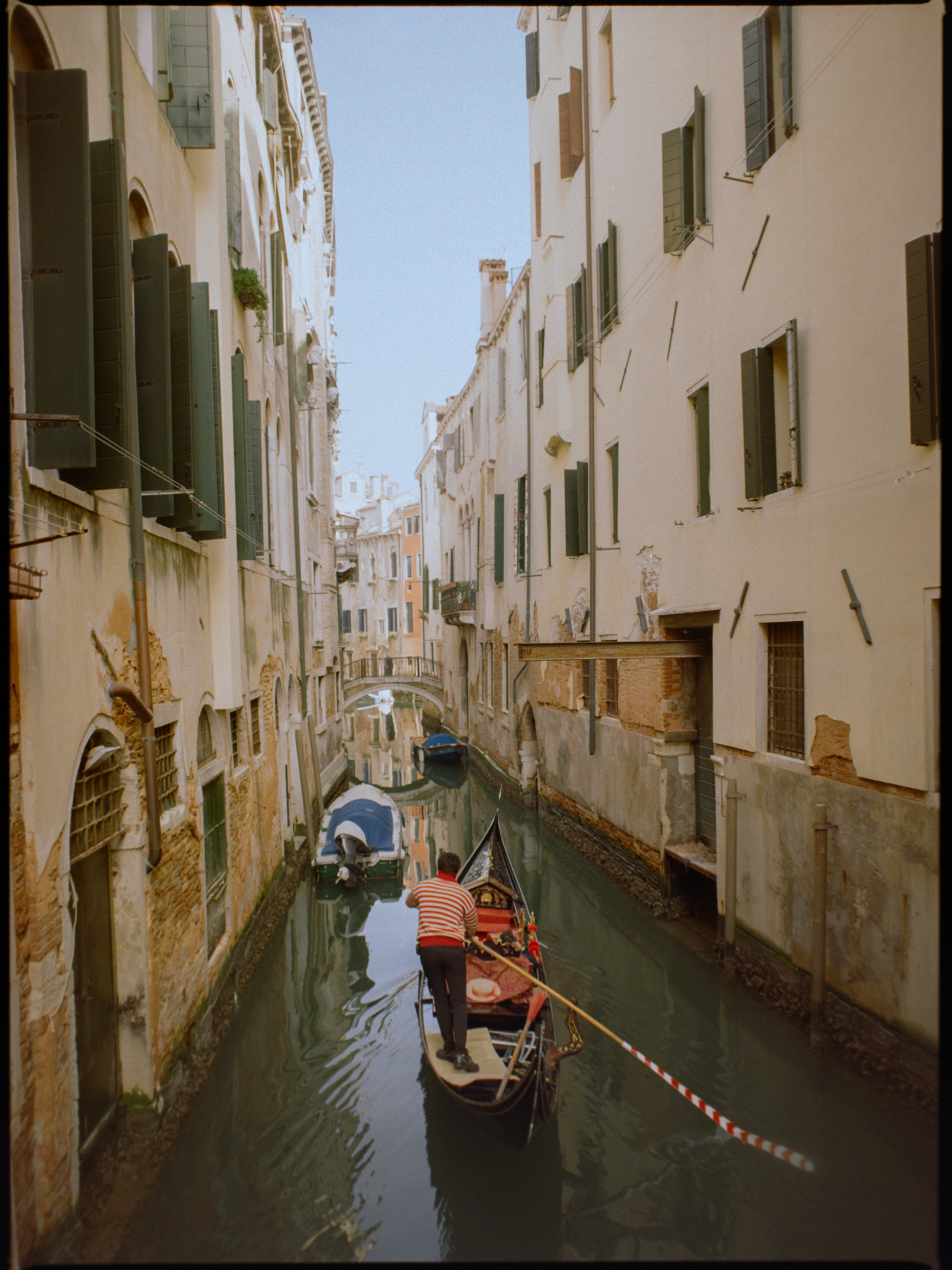
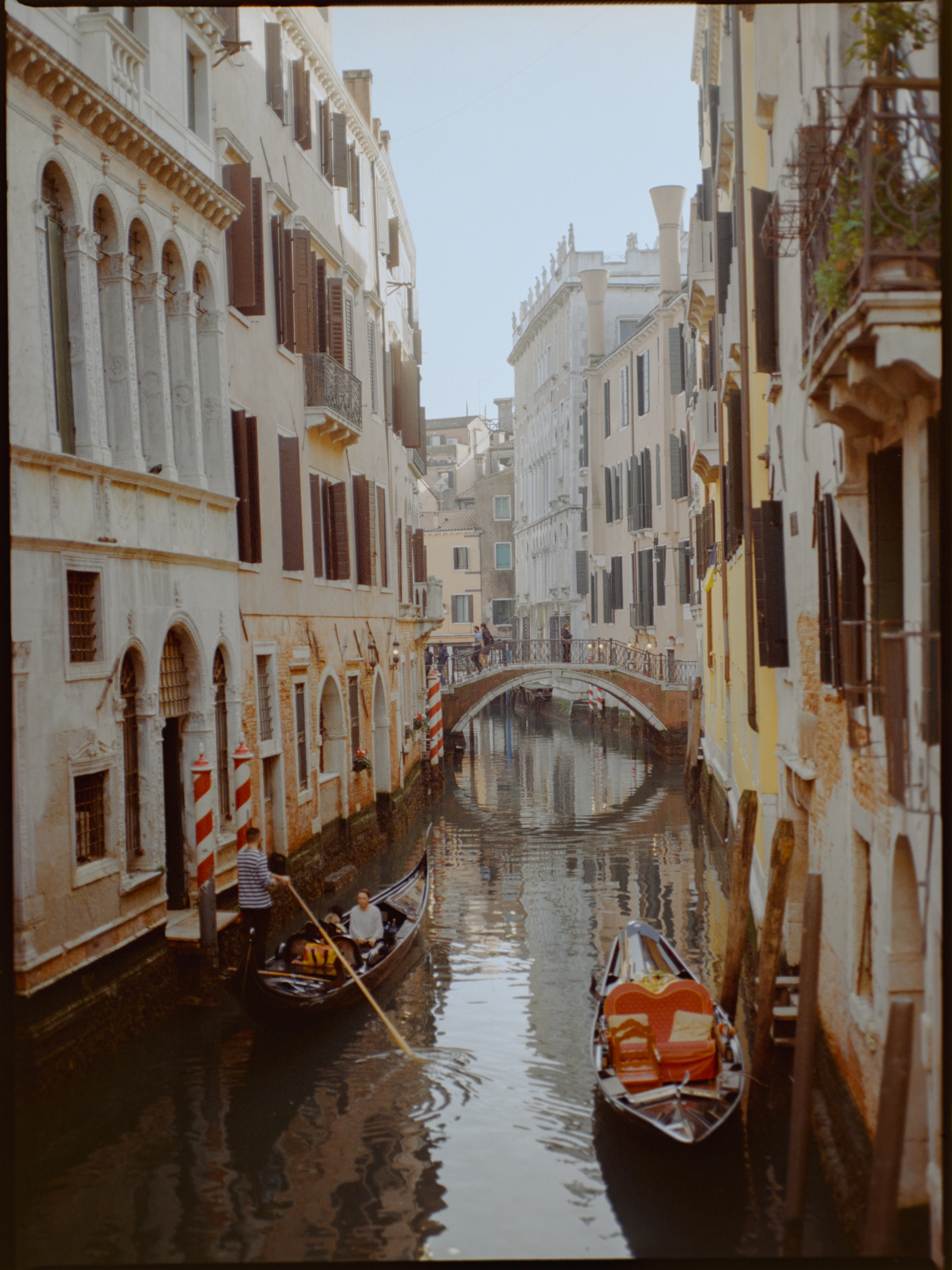
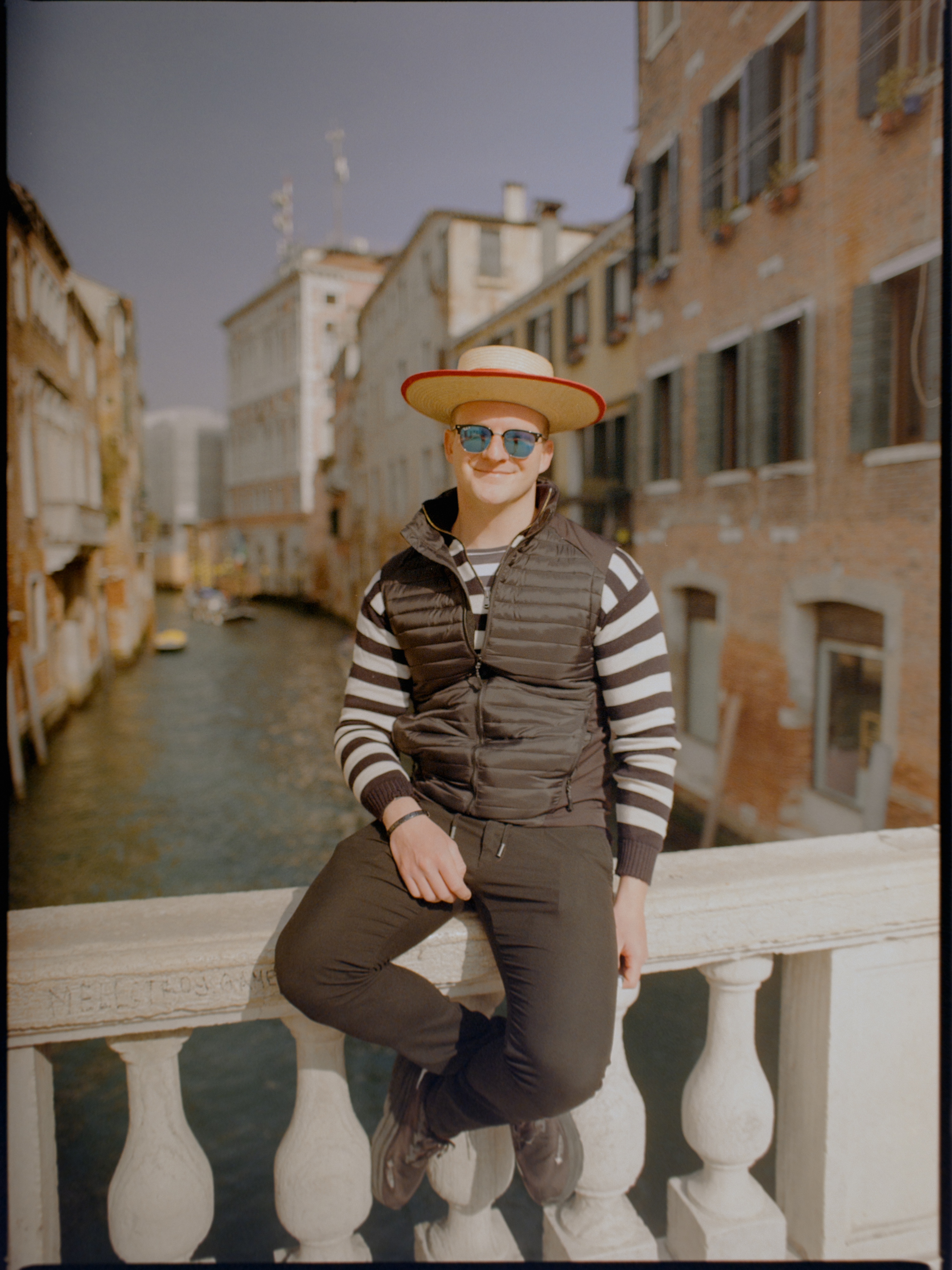
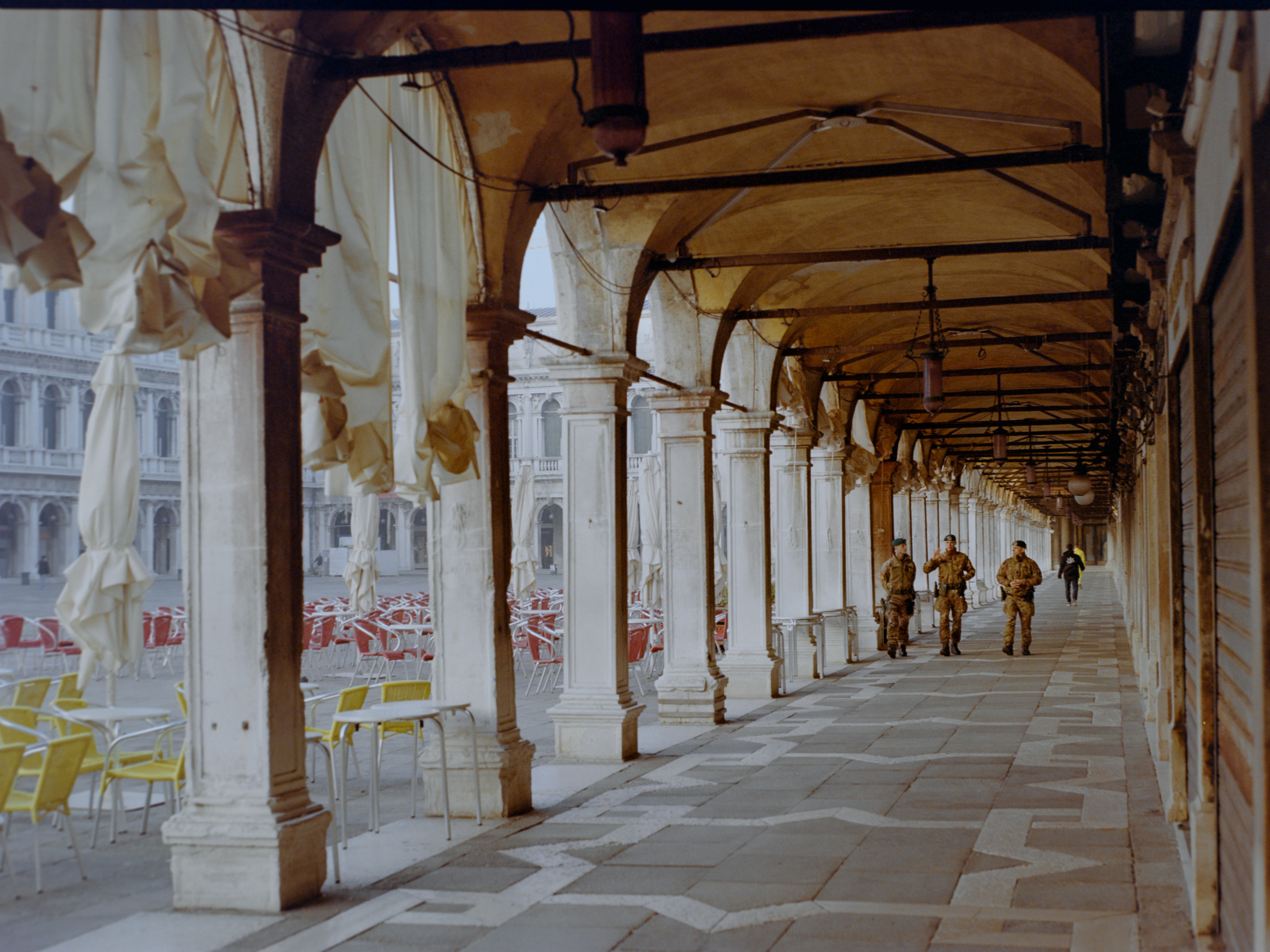
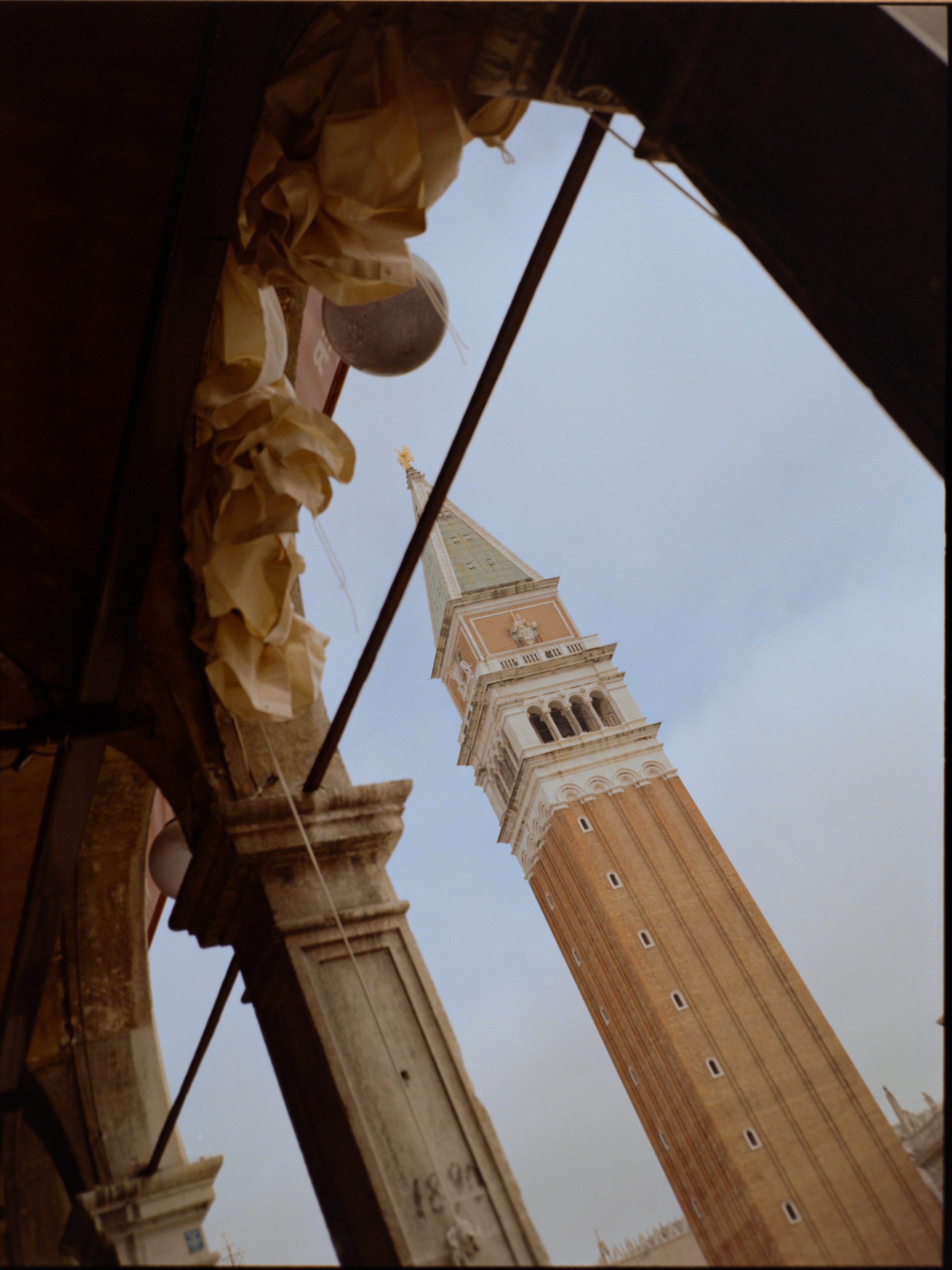
San Marco’s Square at Sunrise
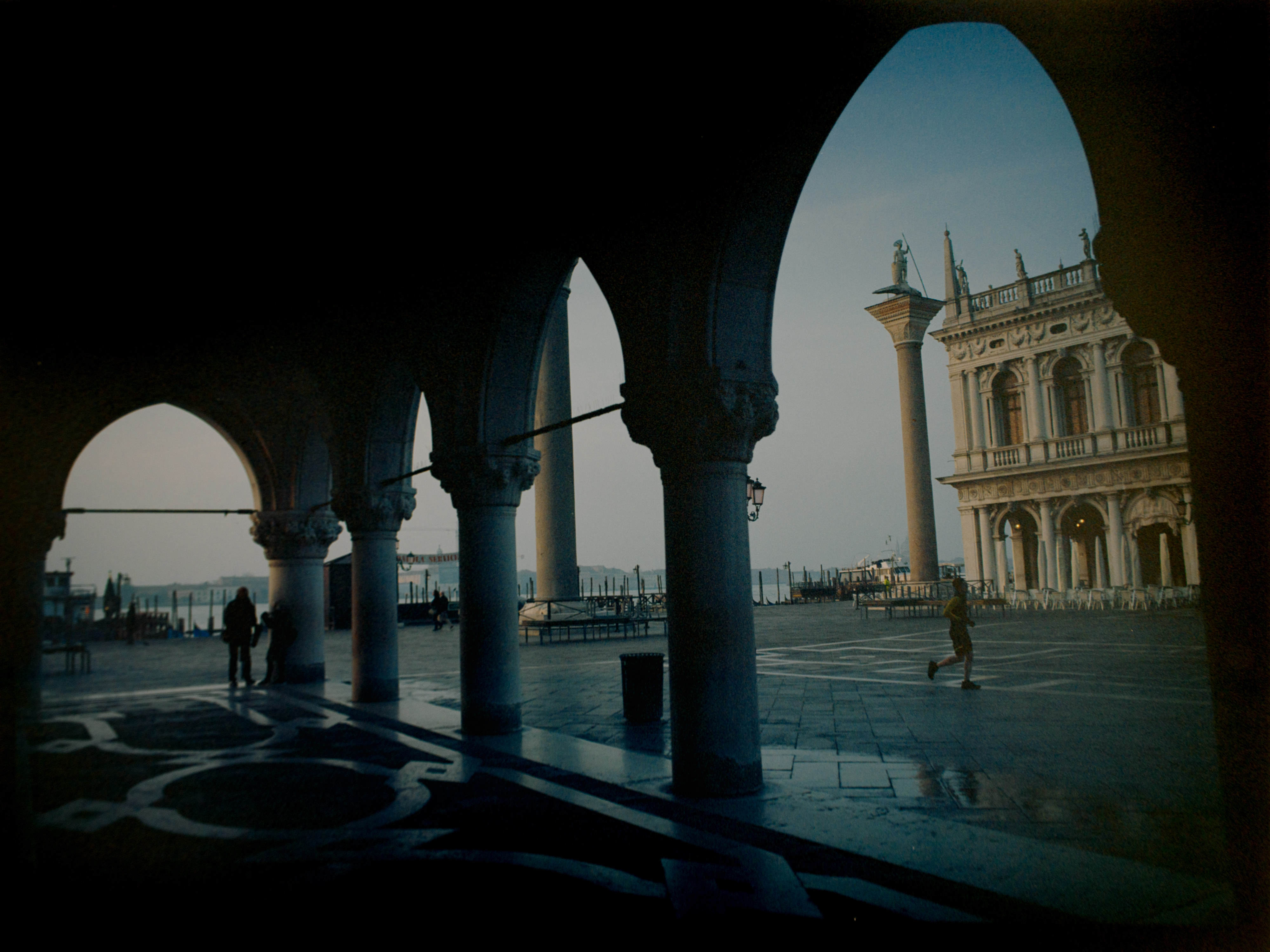
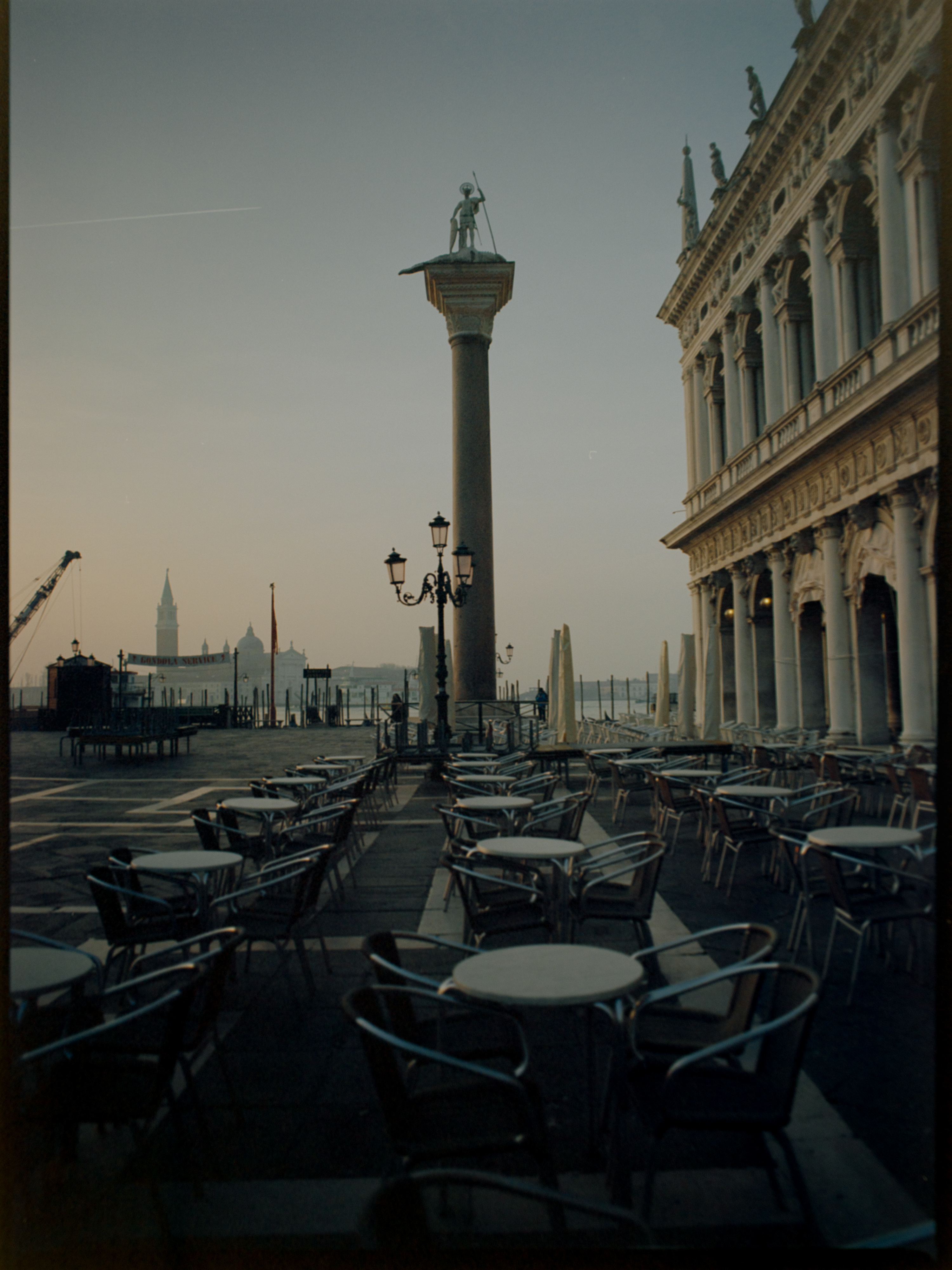
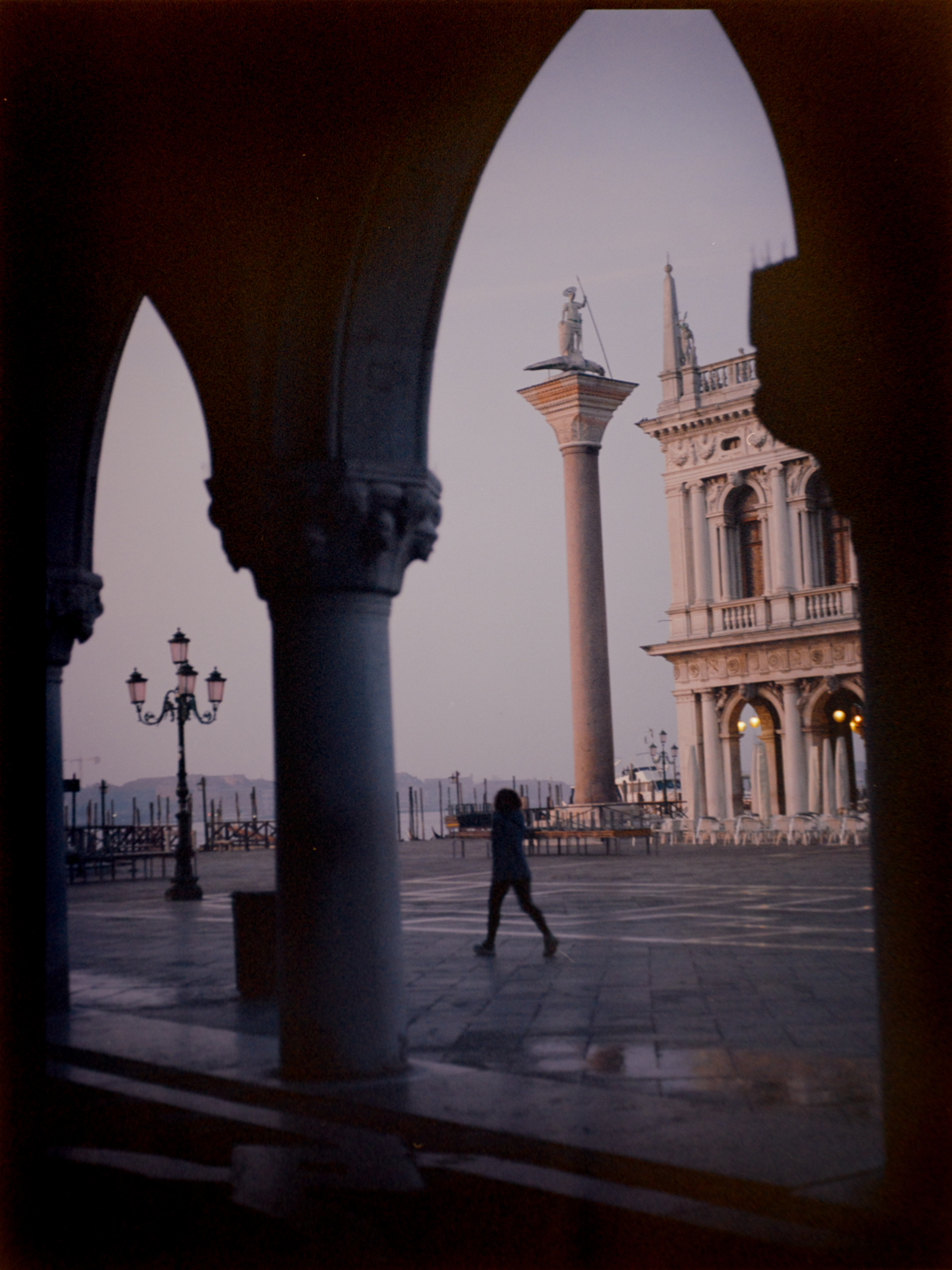
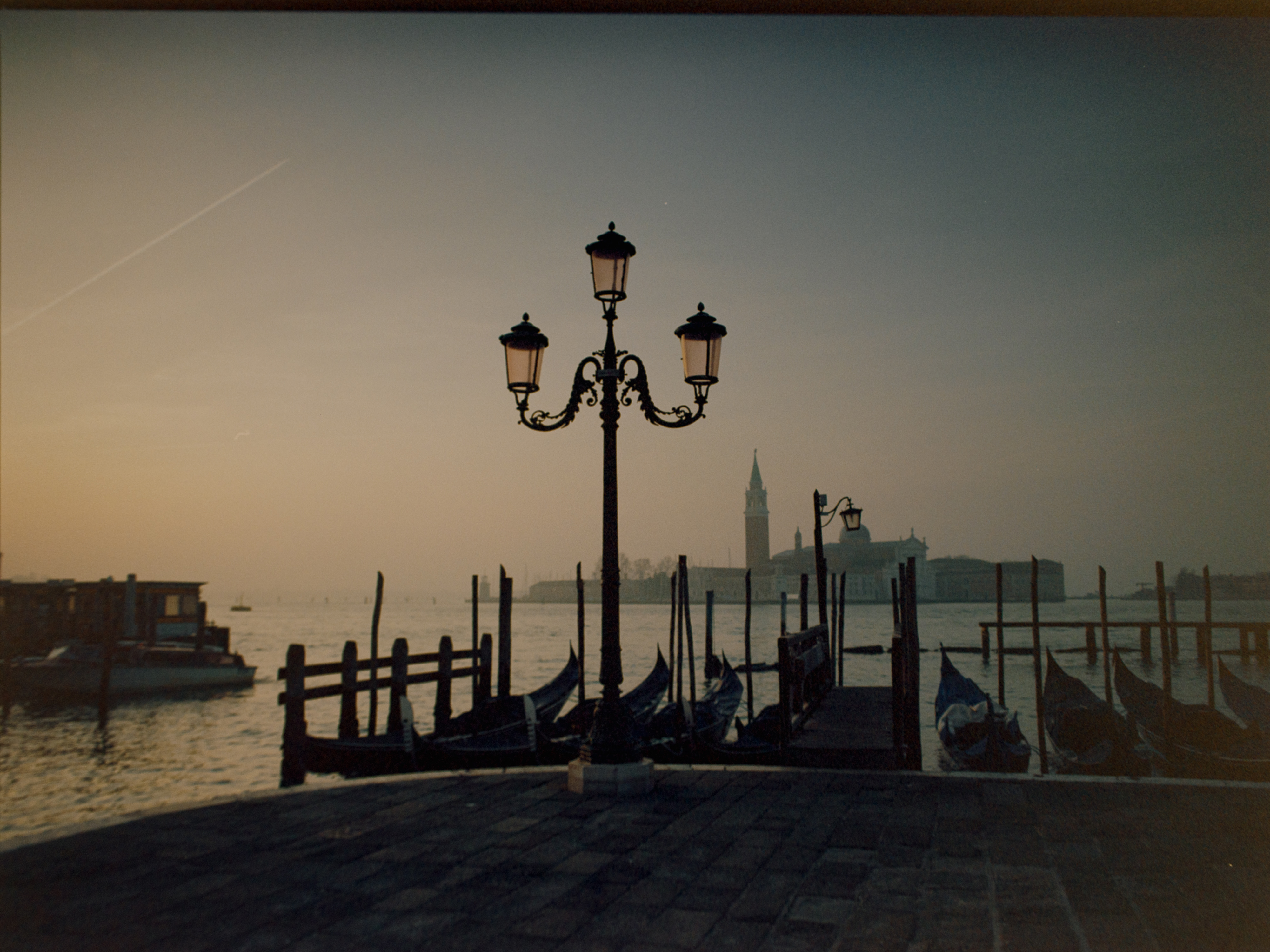
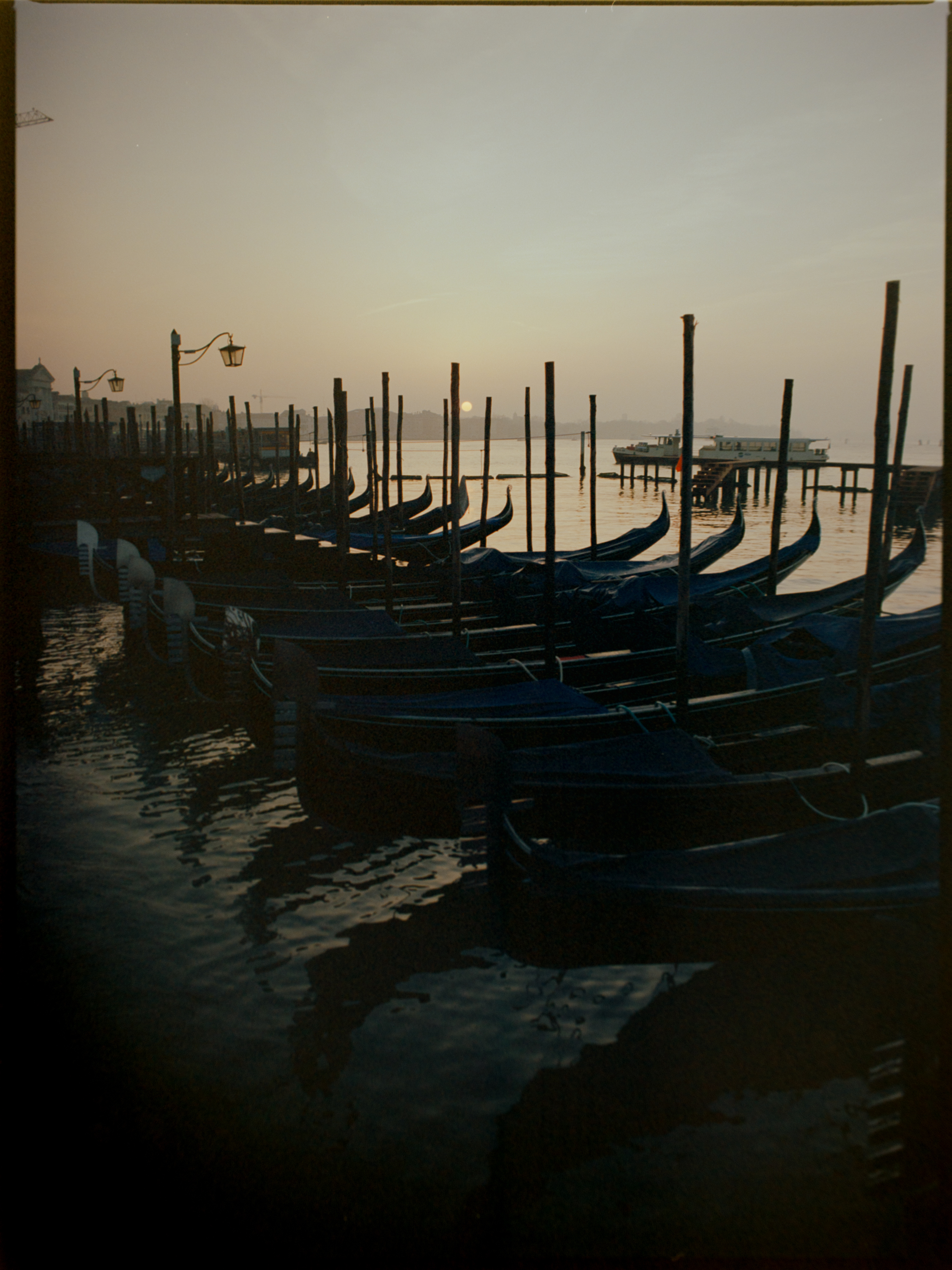
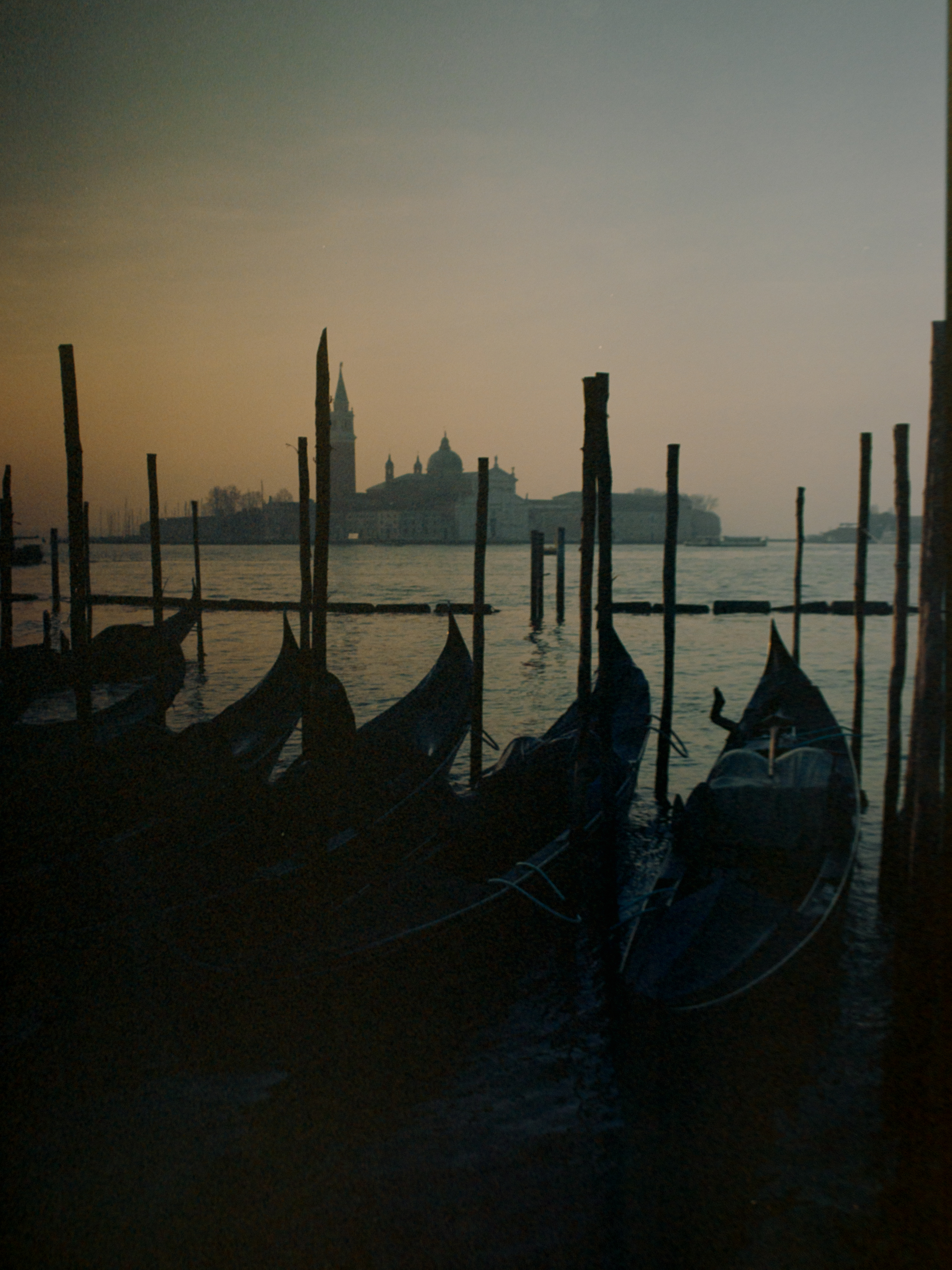
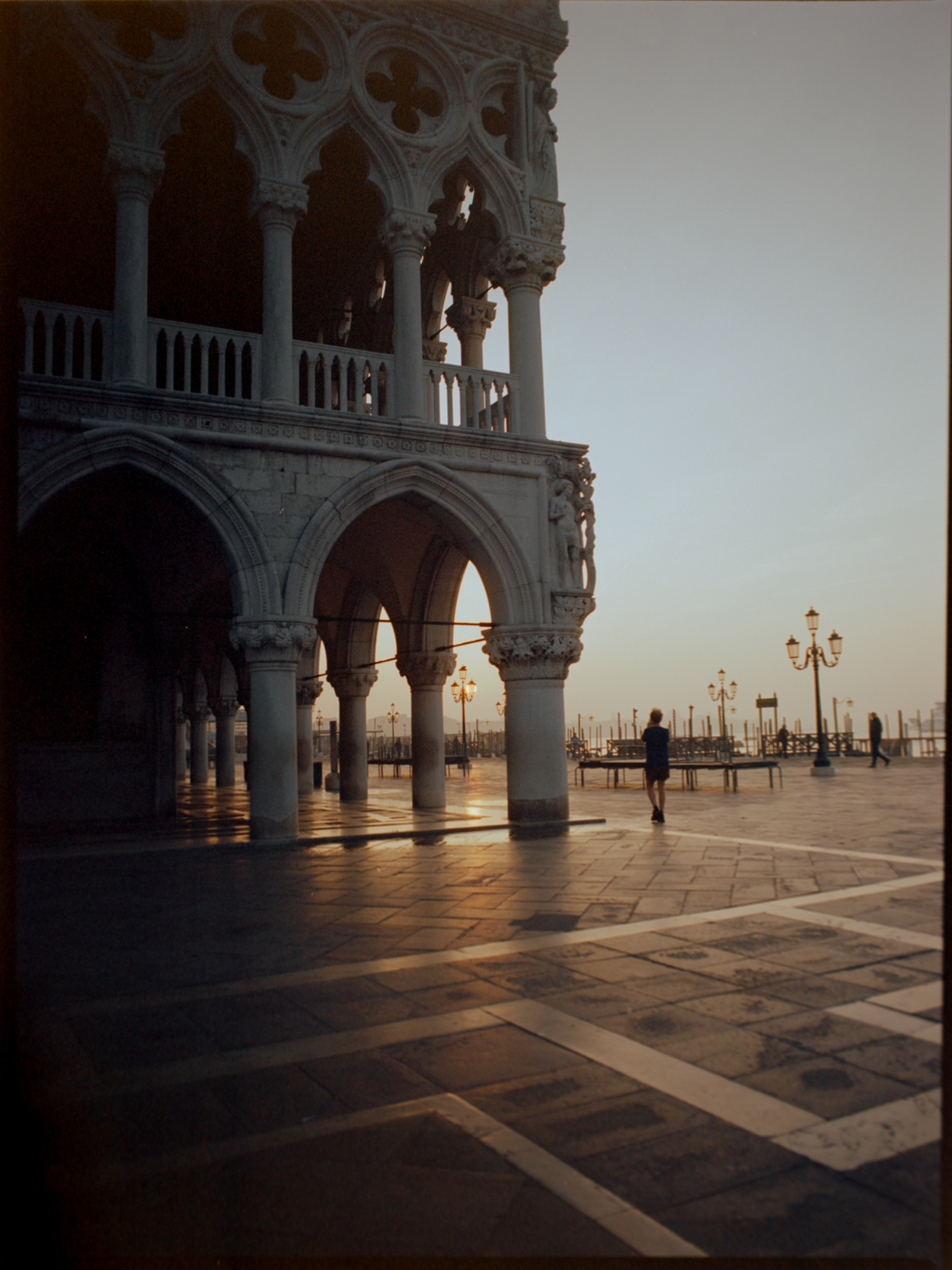
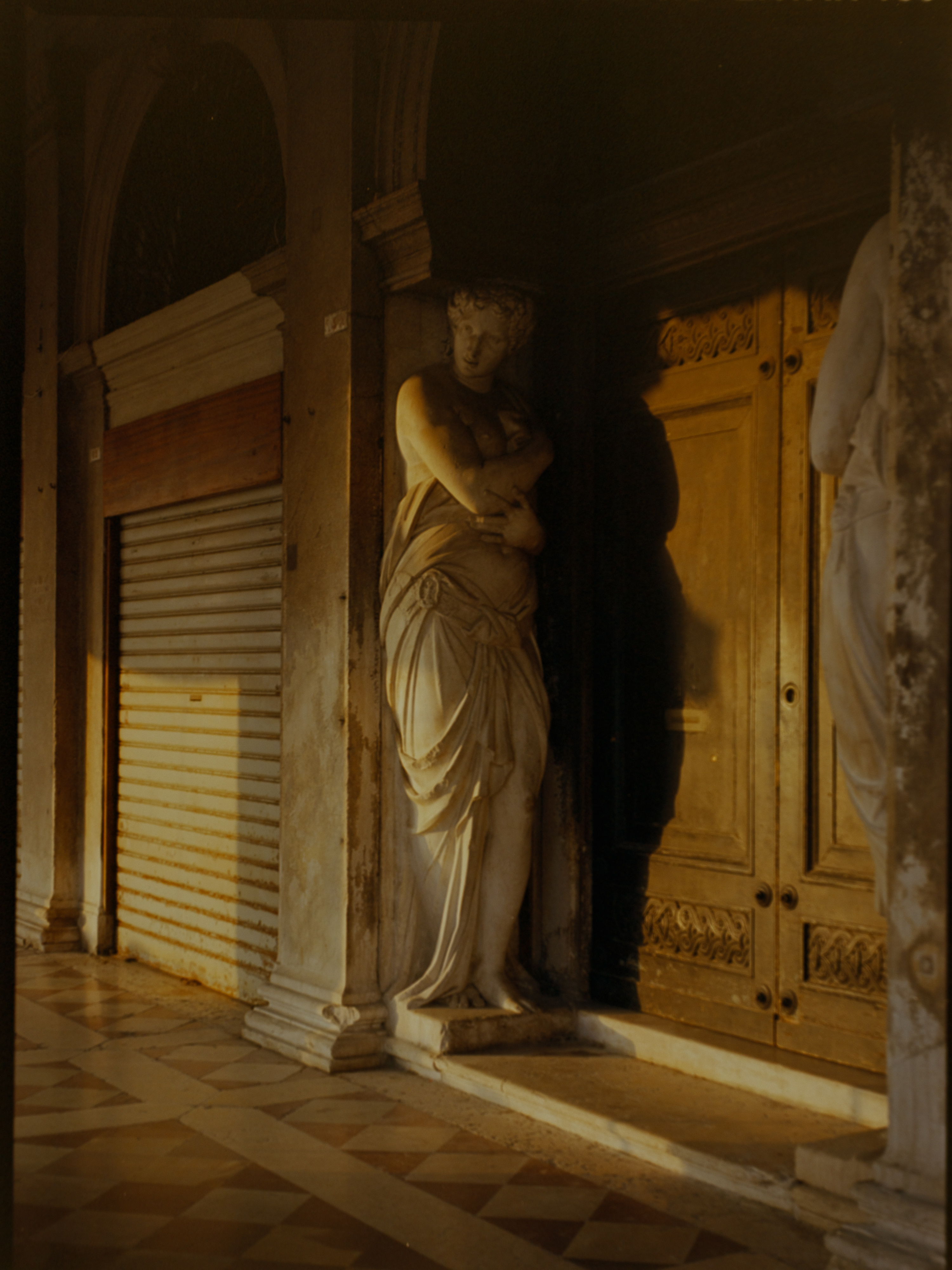
One morning I set the alarm, left everyone sleeping, and walked to San Marco’s Square for sunrise. I loaded the Ektar 100 specifically for this — I knew the early light would be cool and blue, and Ektar’s fine grain and punchy saturation would make the most of whatever colour the sky offered. The square was almost completely empty. No tourists, no pigeons, just a couple of cleaners and the sound of water lapping against stone. It was one of those mornings where you know, as you’re shooting, that the film is going to be good.
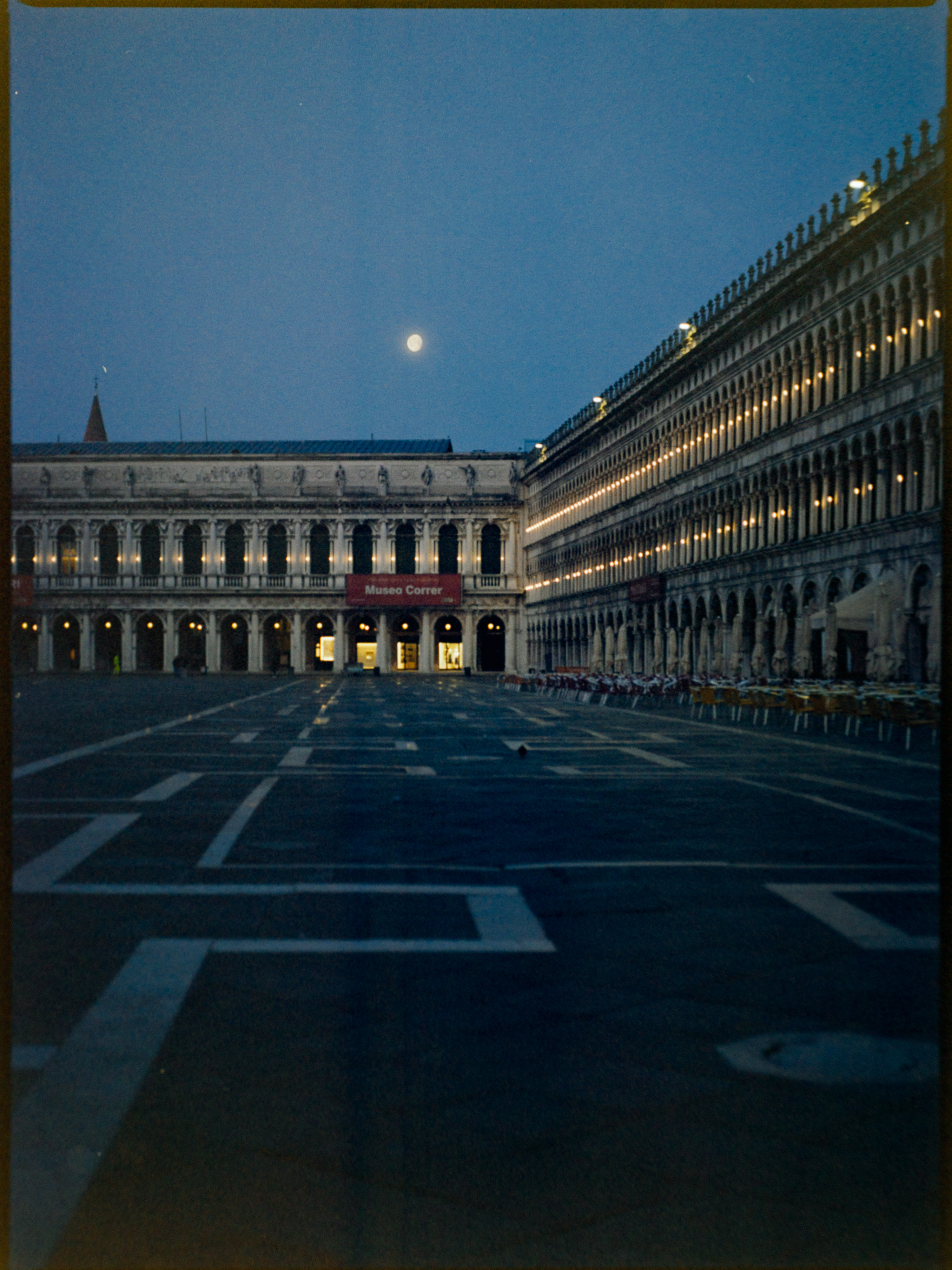
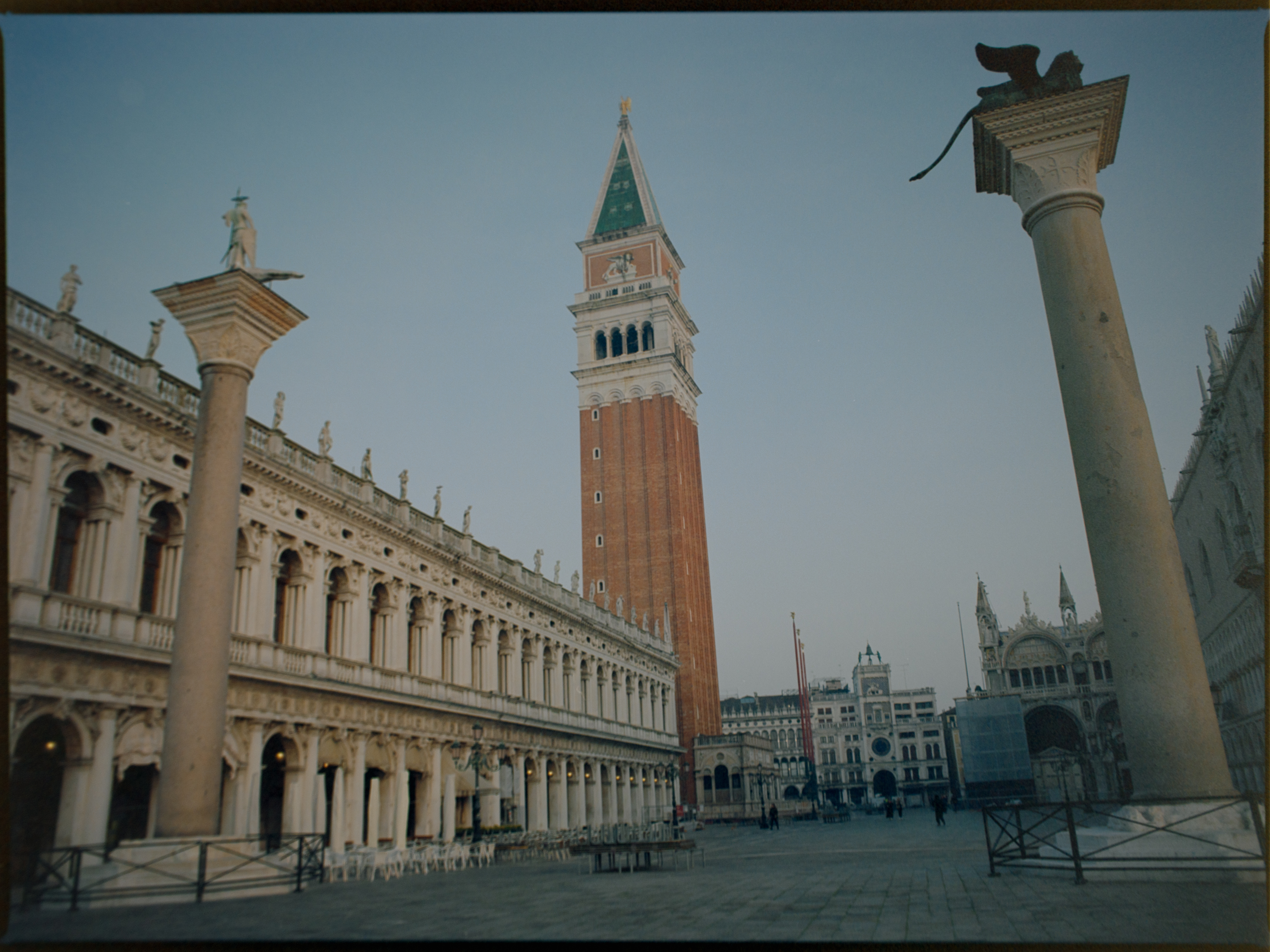
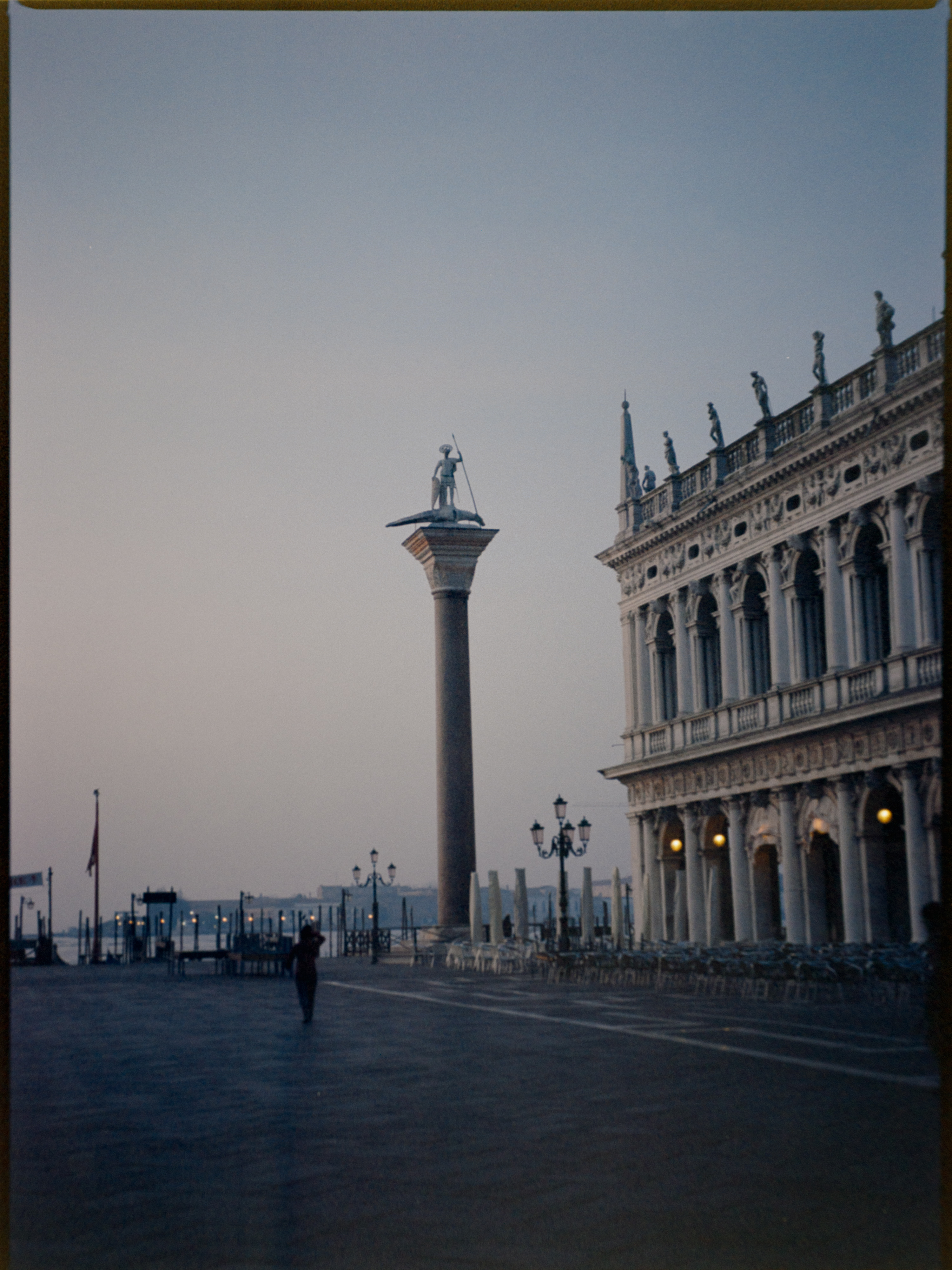
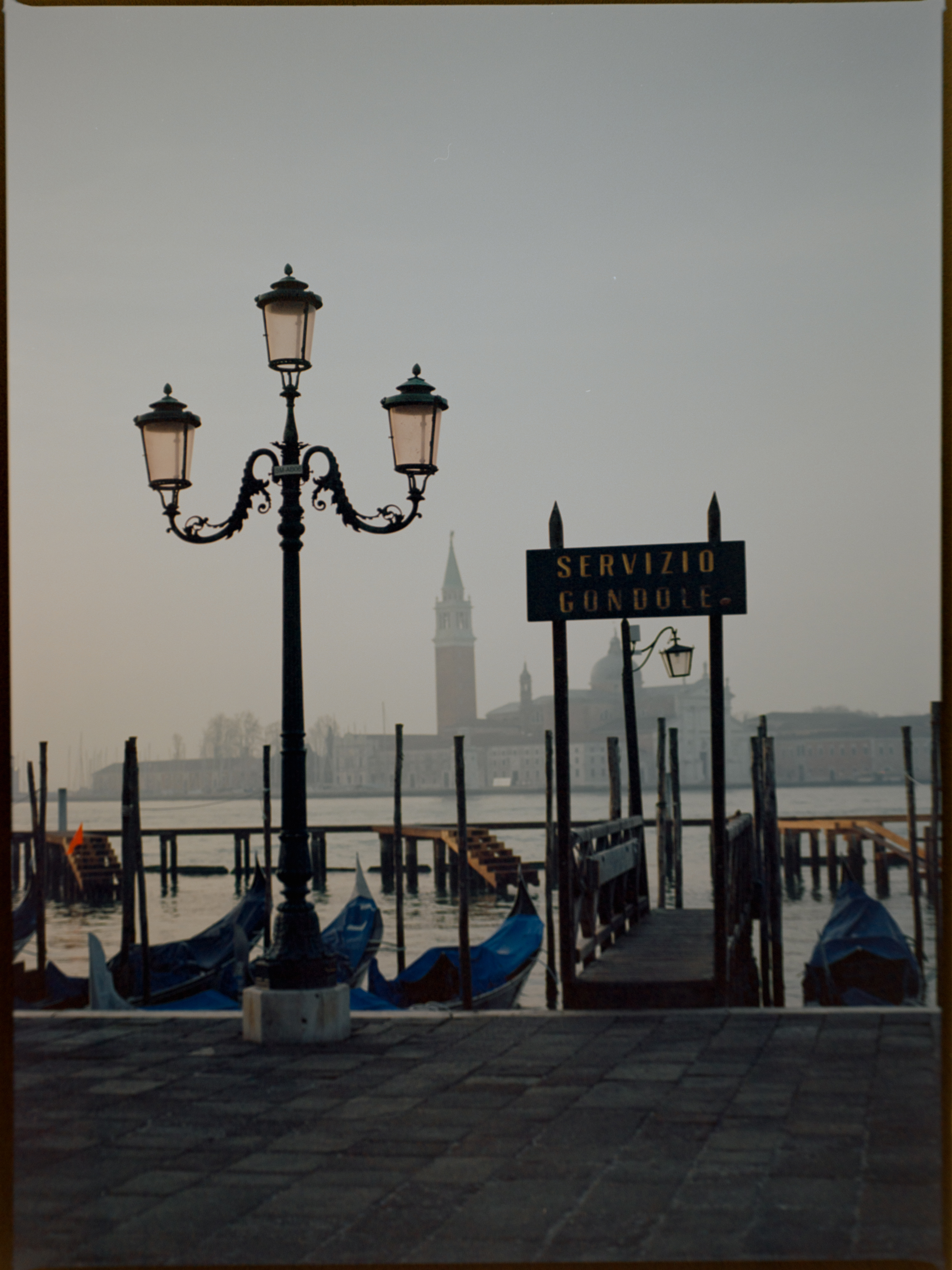
The Ektar handled the dawn light exactly as I’d hoped. Where Gold 200 warms everything up and softens the contrast, Ektar keeps the blues blue and the shadows deep. The square has a completely different character before the crowds arrive — the architecture dominates, the proportions feel vast, and every footstep echoes. I shot slowly, working my way from the Piazzetta down to the waterfront and back again, and burned through most of the roll in about forty minutes.
Ponte di Rialto
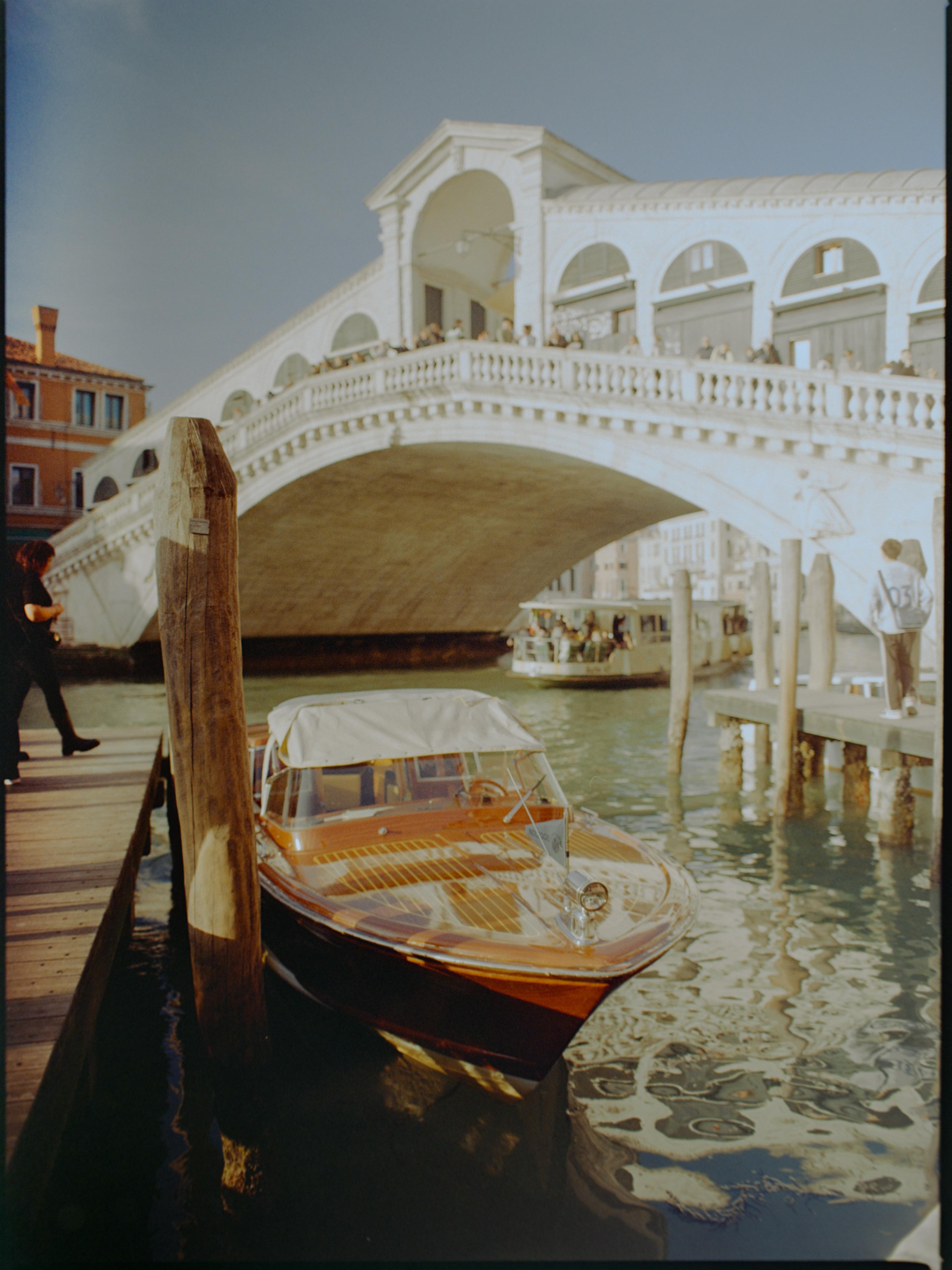
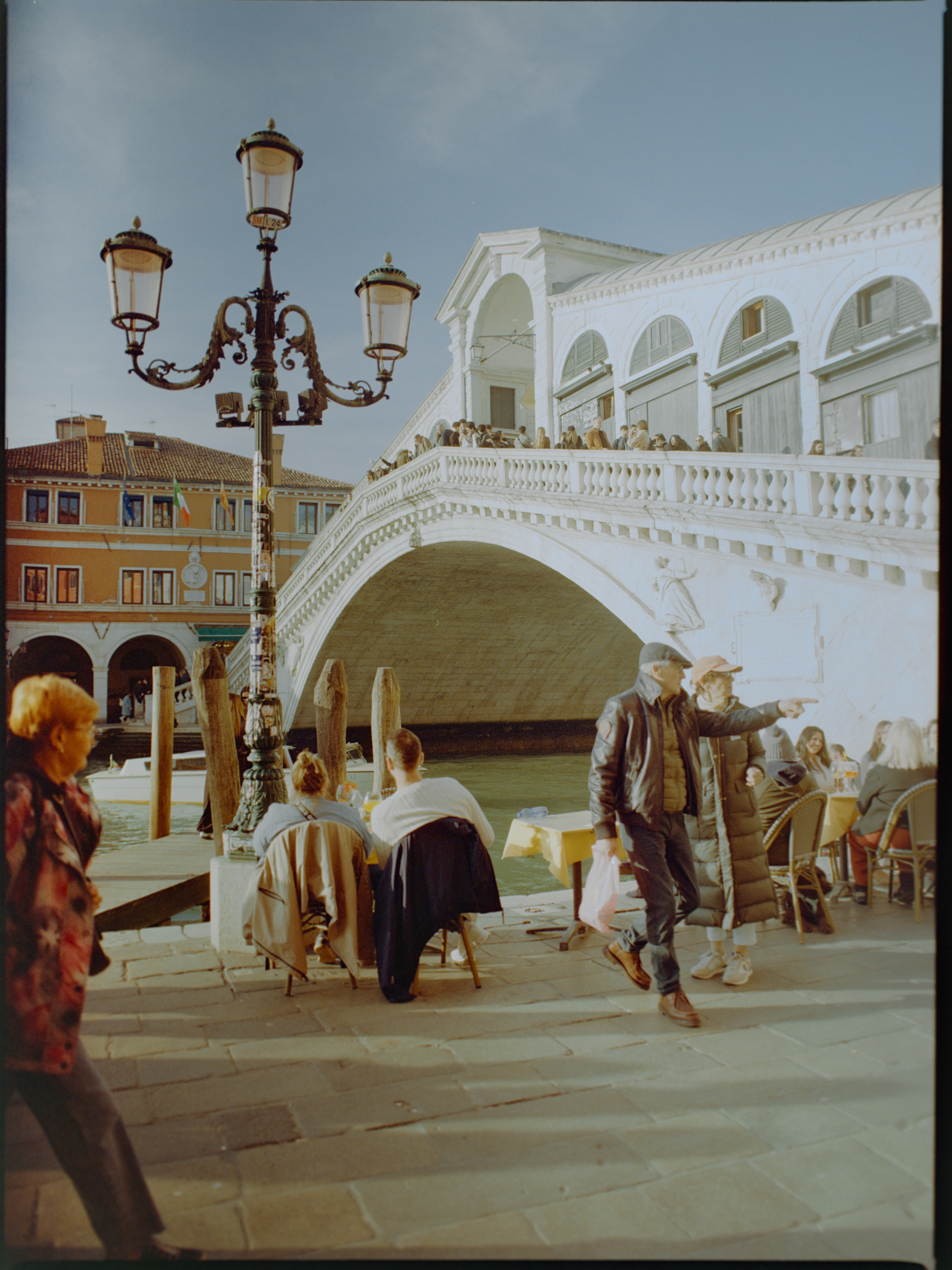
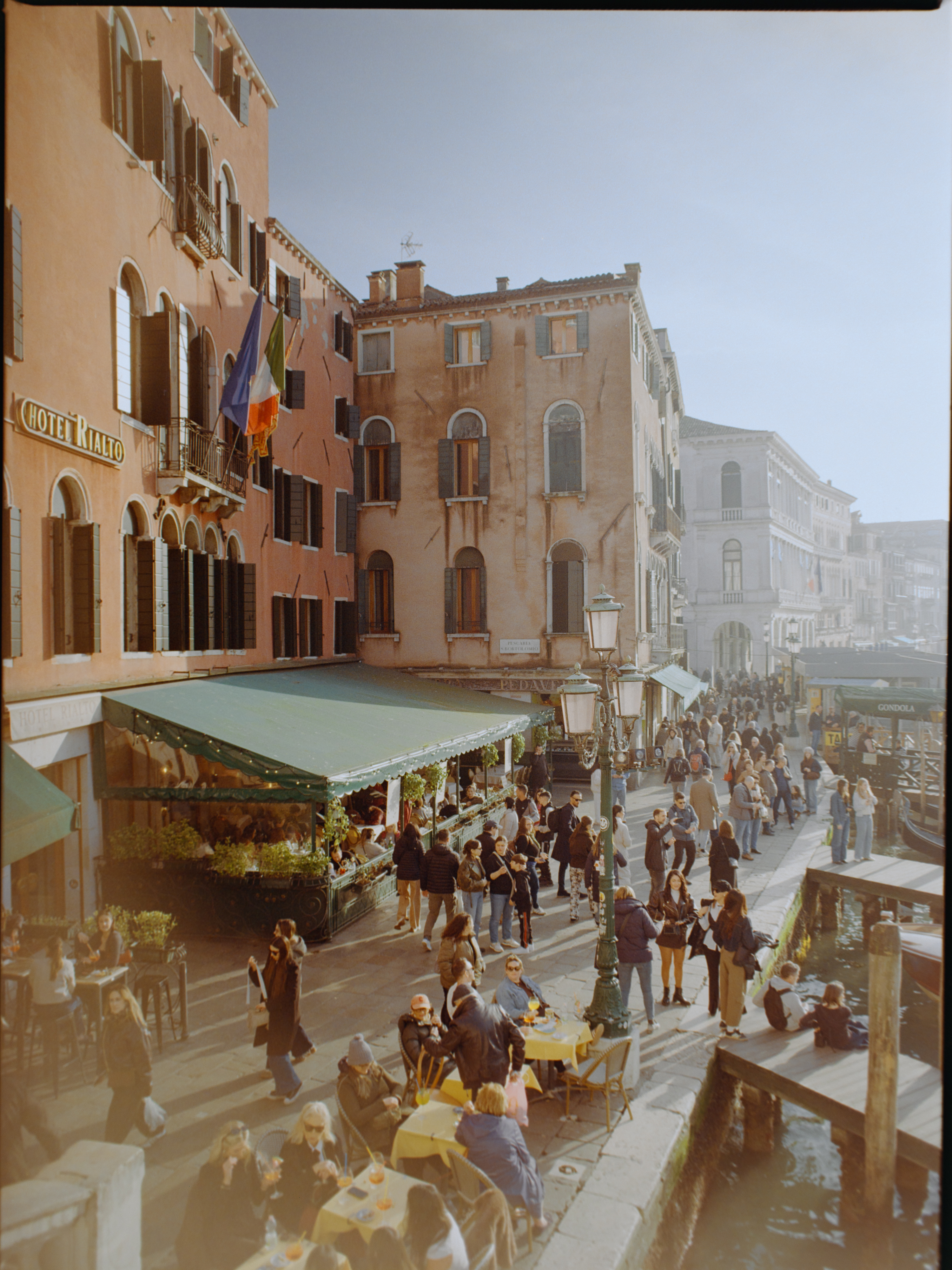
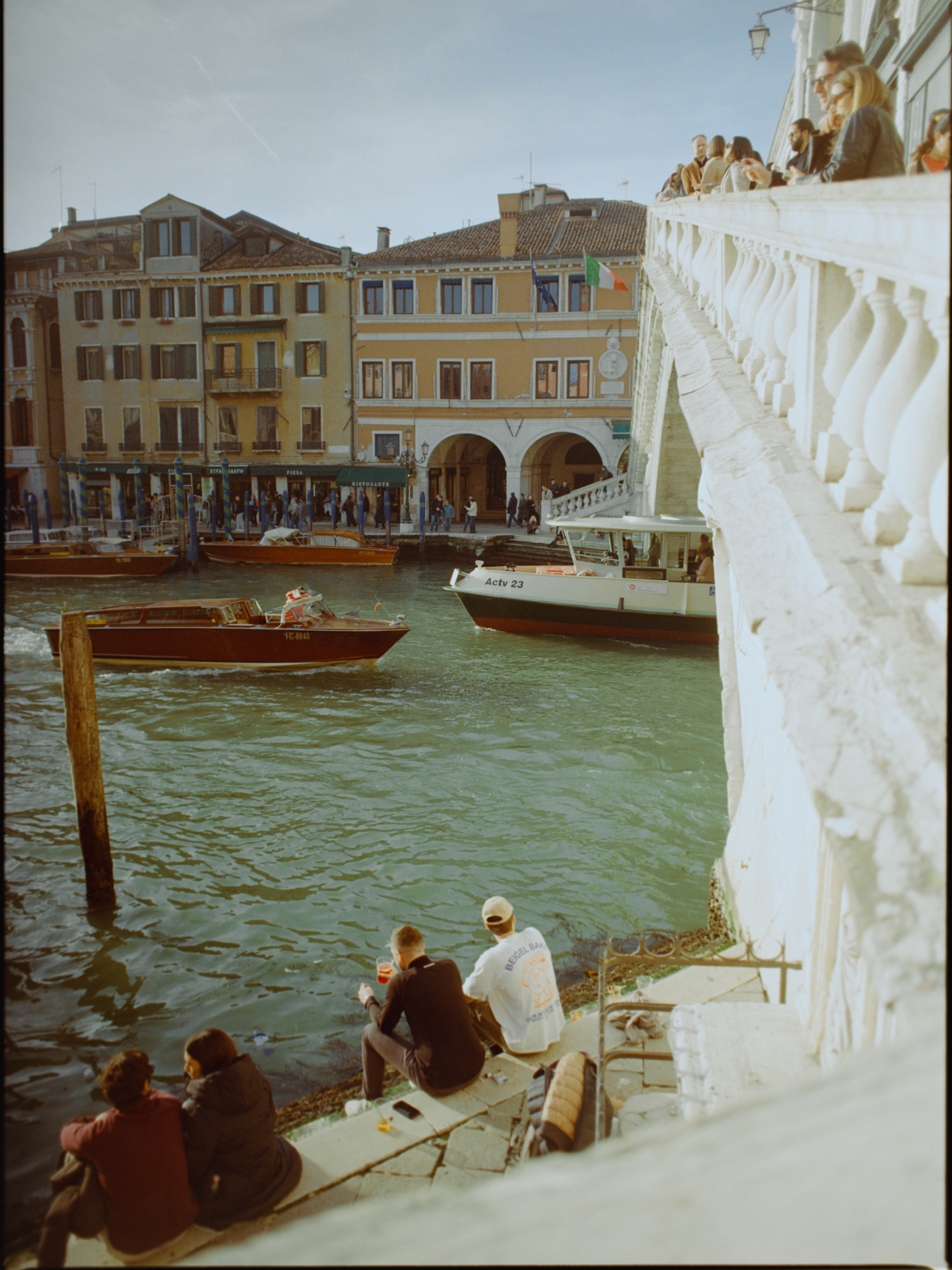
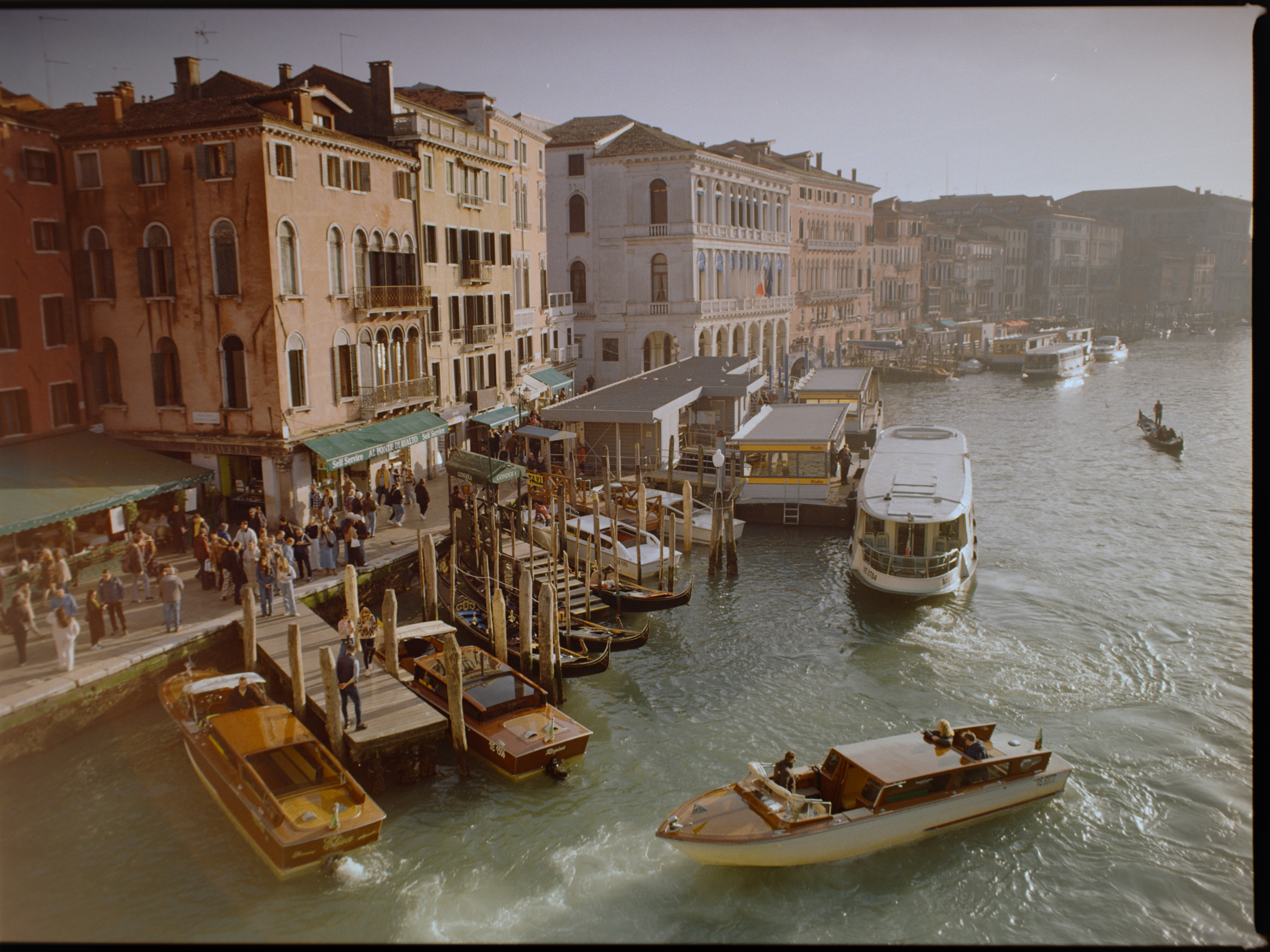
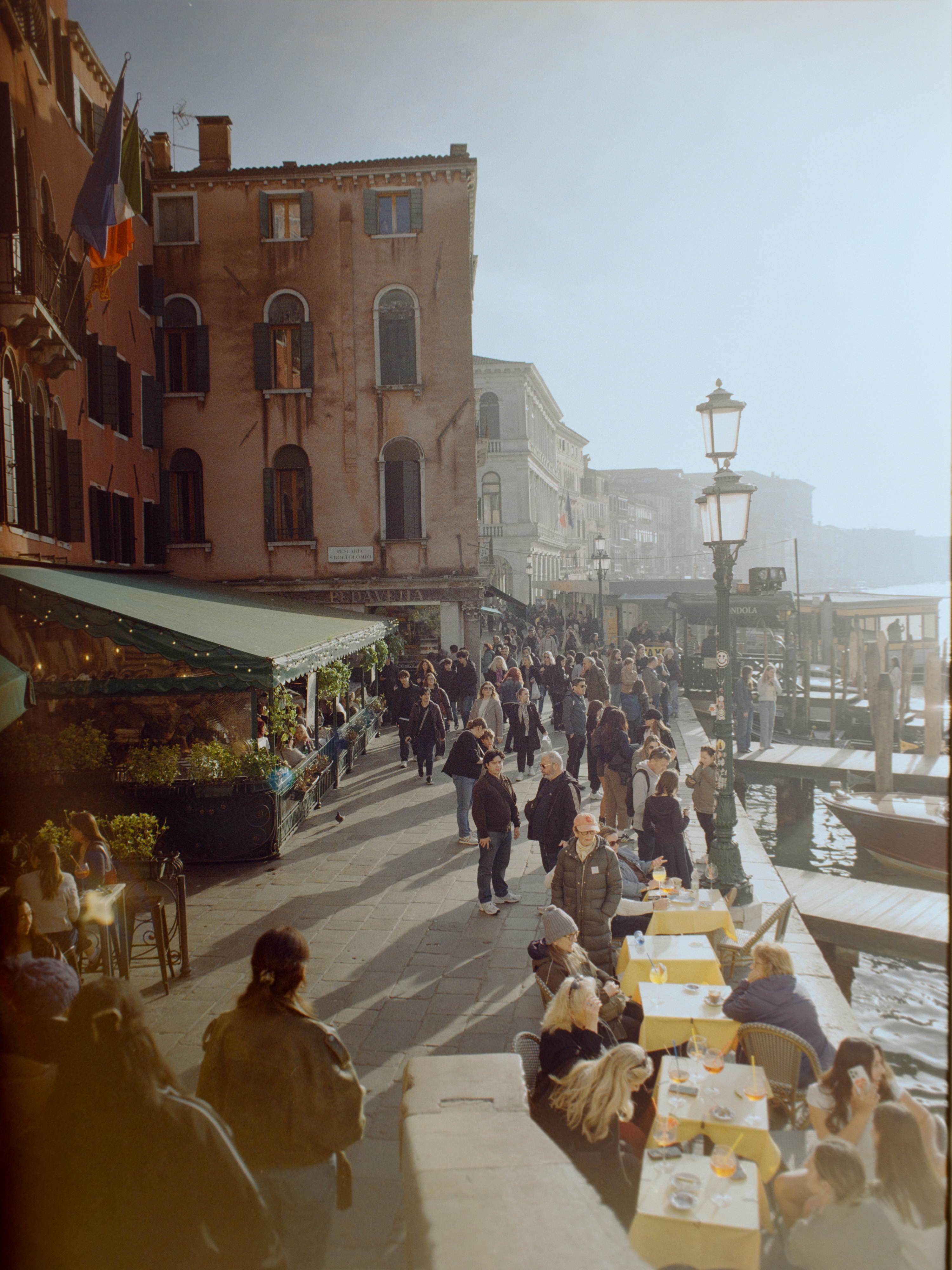
Being three minutes from the Rialto Bridge meant we walked across it several times a day. It’s one of those spots that changes completely depending on when you visit — first thing in the morning it’s quiet and the light rakes down the Grand Canal; by midday it’s packed with people eating overpriced pasta at the waterfront restaurants; and by late afternoon the golden hour light turns the whole scene into something that doesn’t look real. I shot it at all three times and honestly, every version of it is good.
The Rialto Market
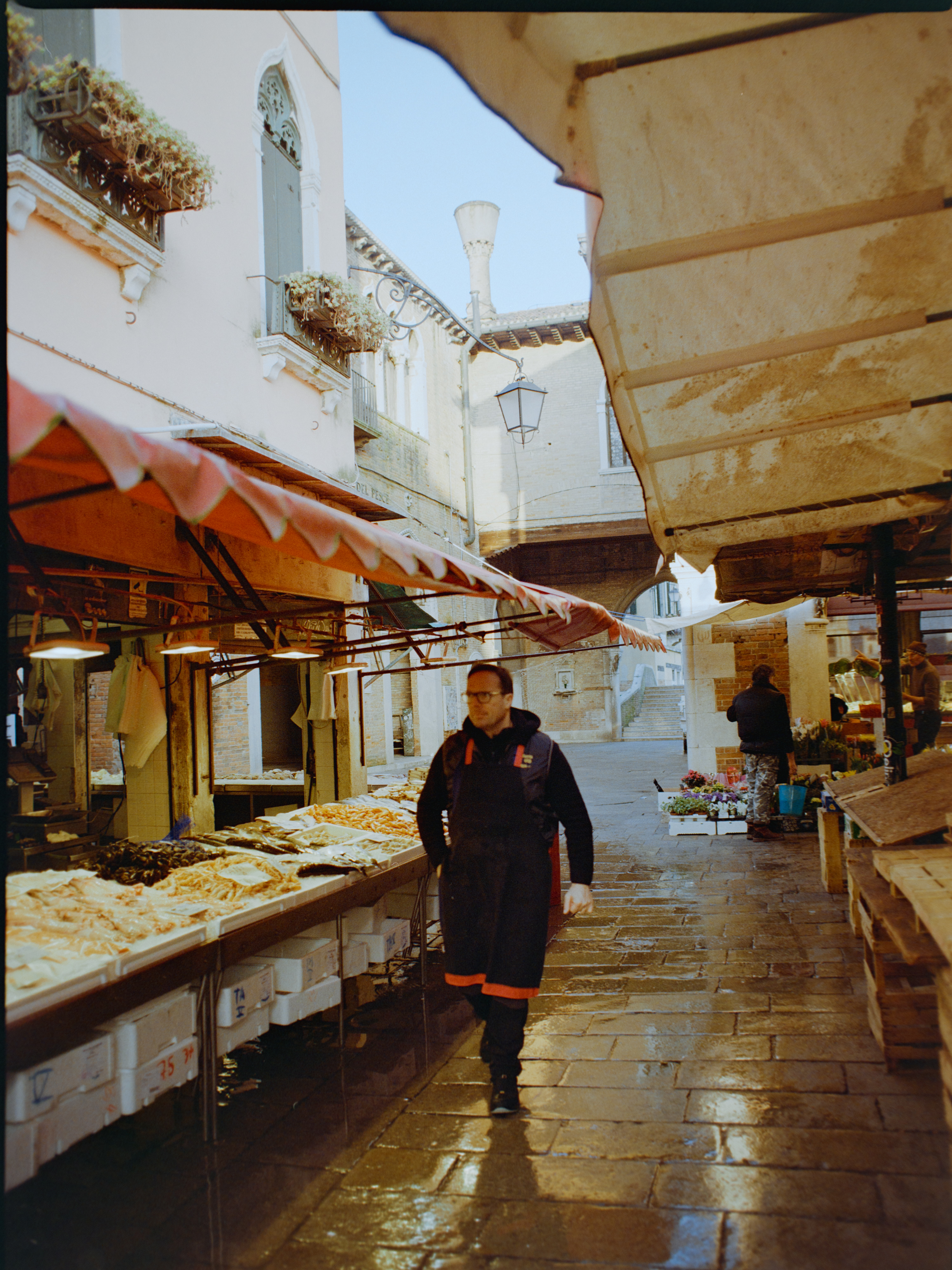
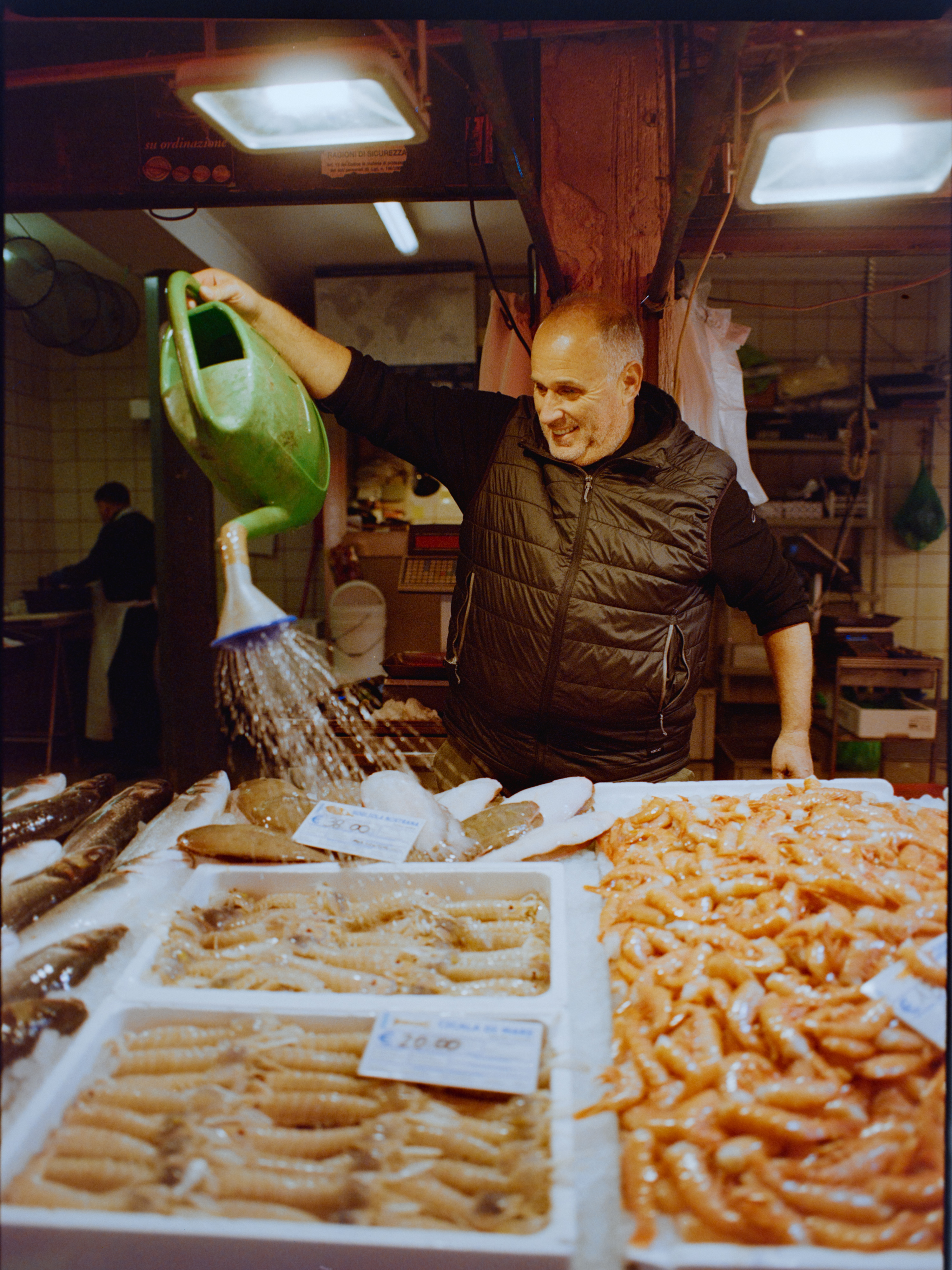
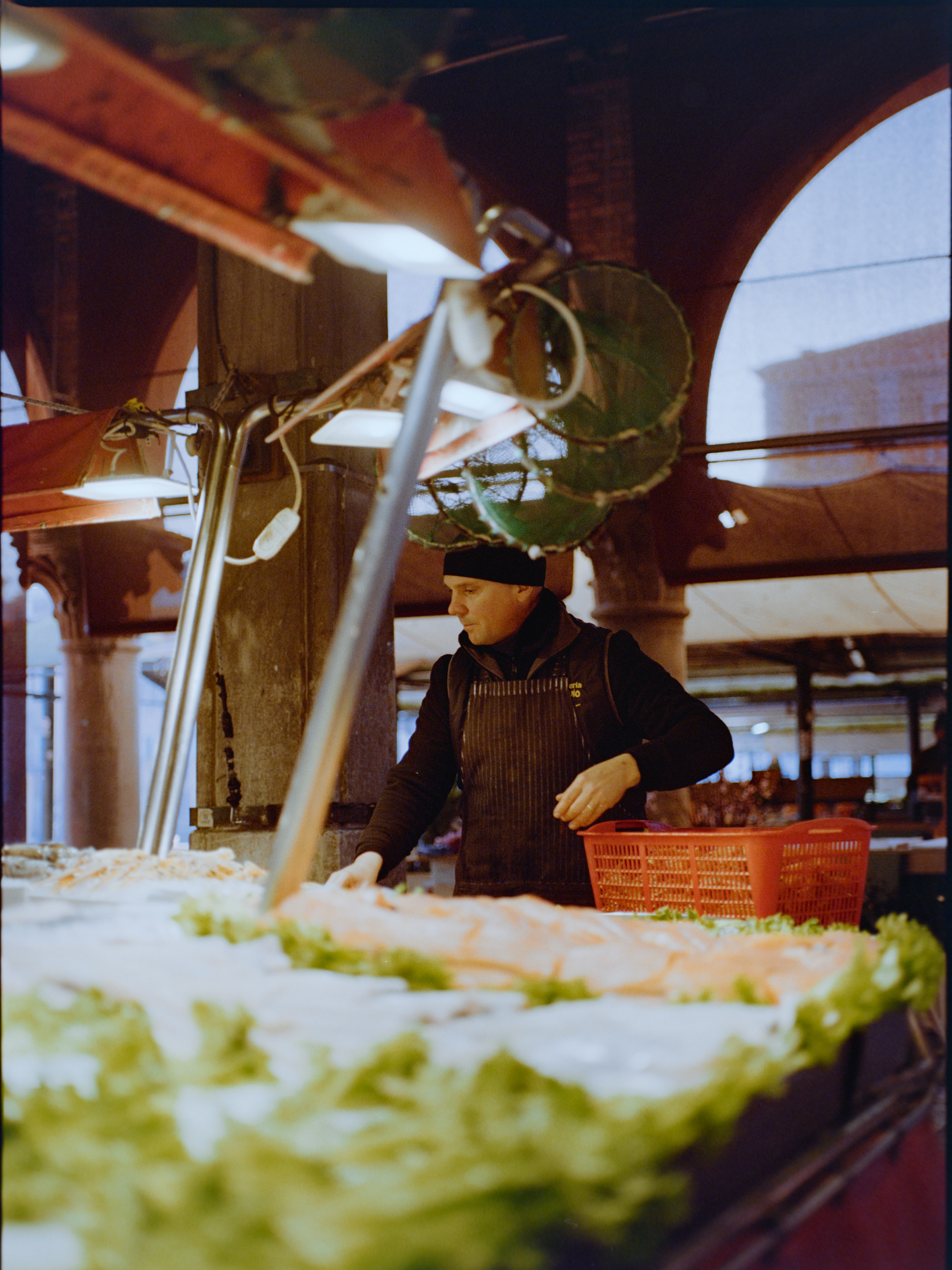
Another early start, another empty Venice. The Rialto Market is only a couple of minutes from where we were staying, and I wanted to catch the vendors setting up before the tourists arrived. The fish market in particular has a beautiful, grimy quality to it — wet cobblestones, red awnings, the smell of the lagoon. It’s the side of Venice that most visitors walk straight past, and it’s exactly the kind of scene that medium format film handles well. There’s a texture and presence to the negatives that digital doesn’t quite capture in the same way.
A Day on Burano
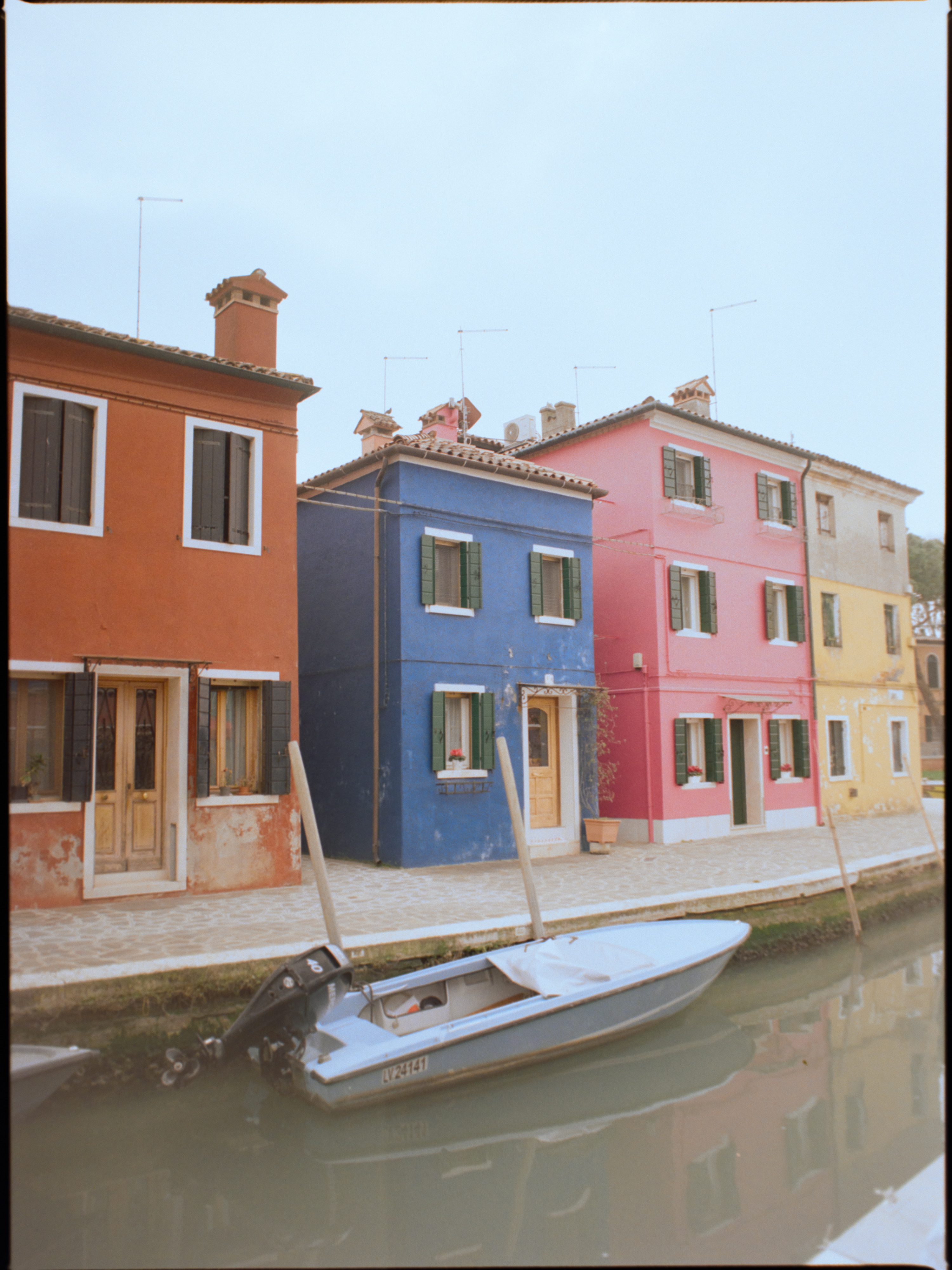
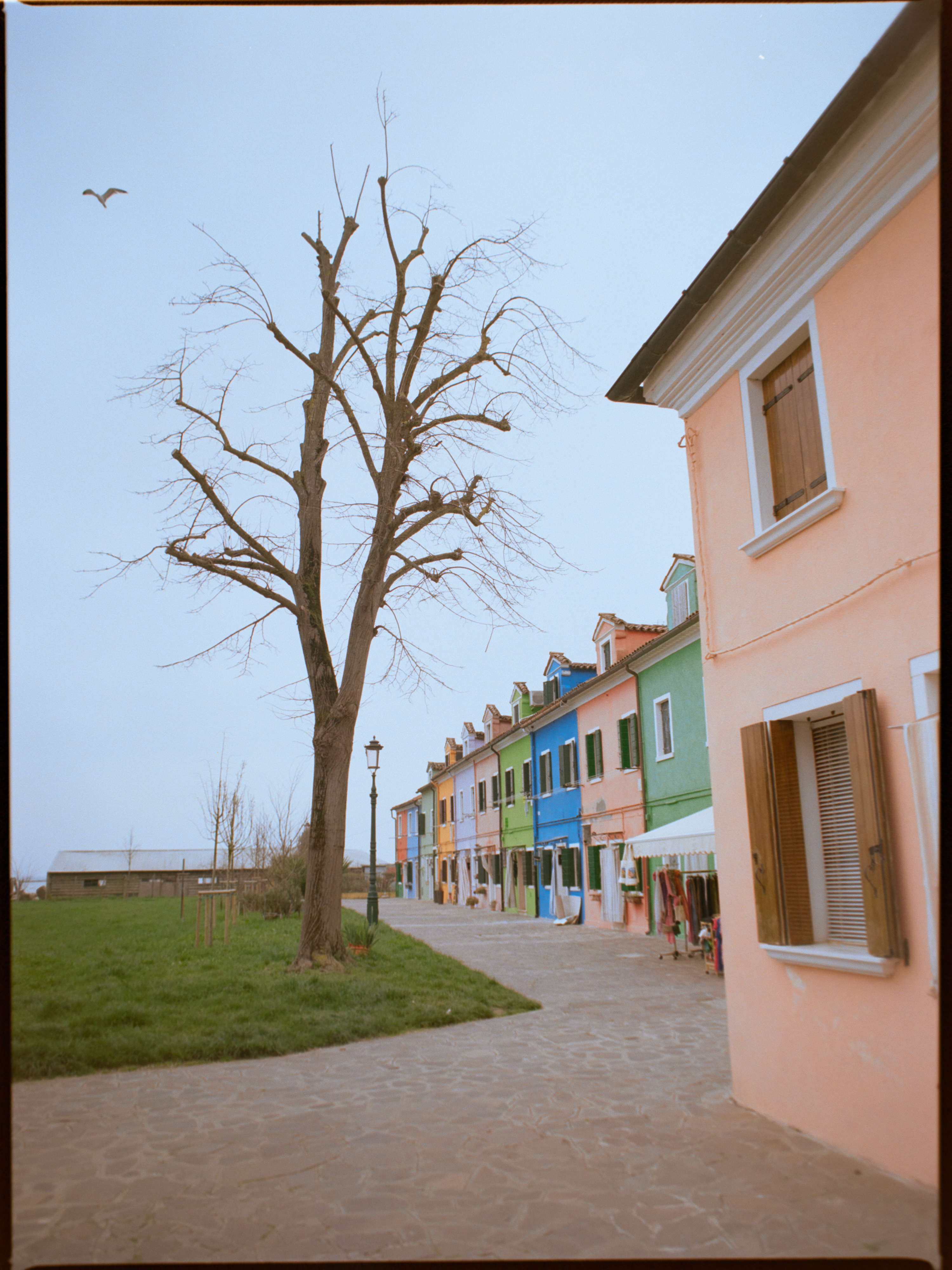
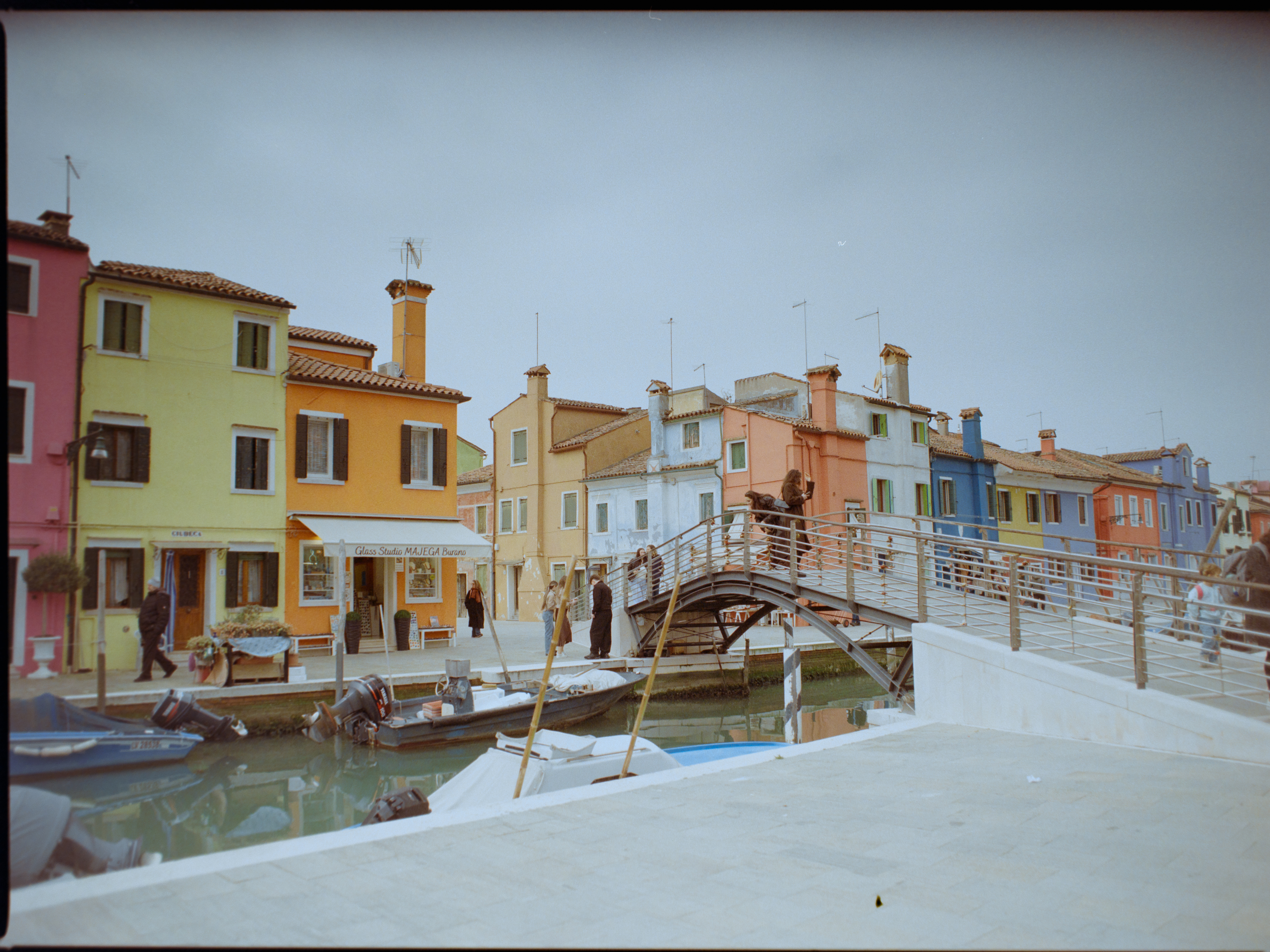
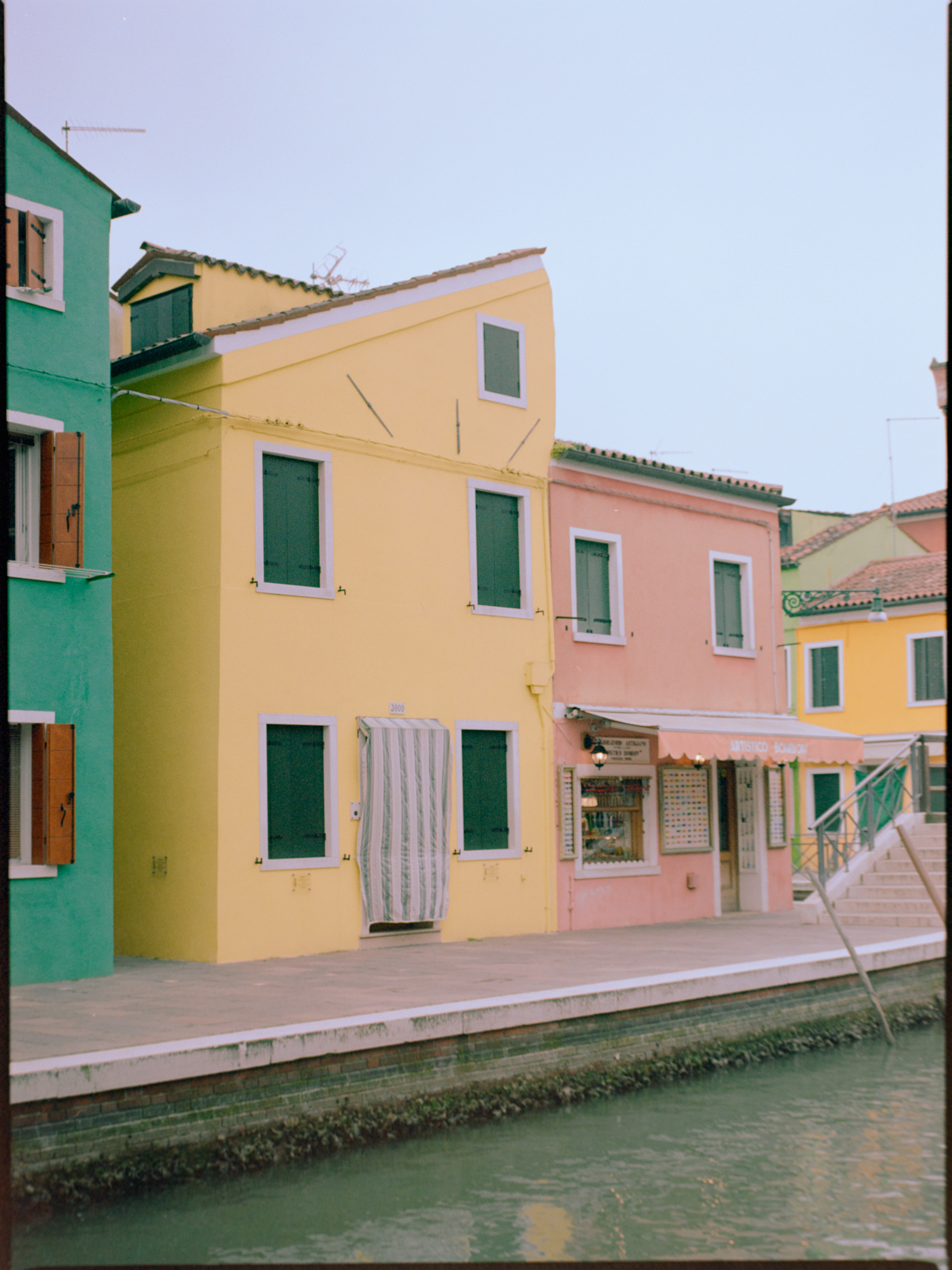
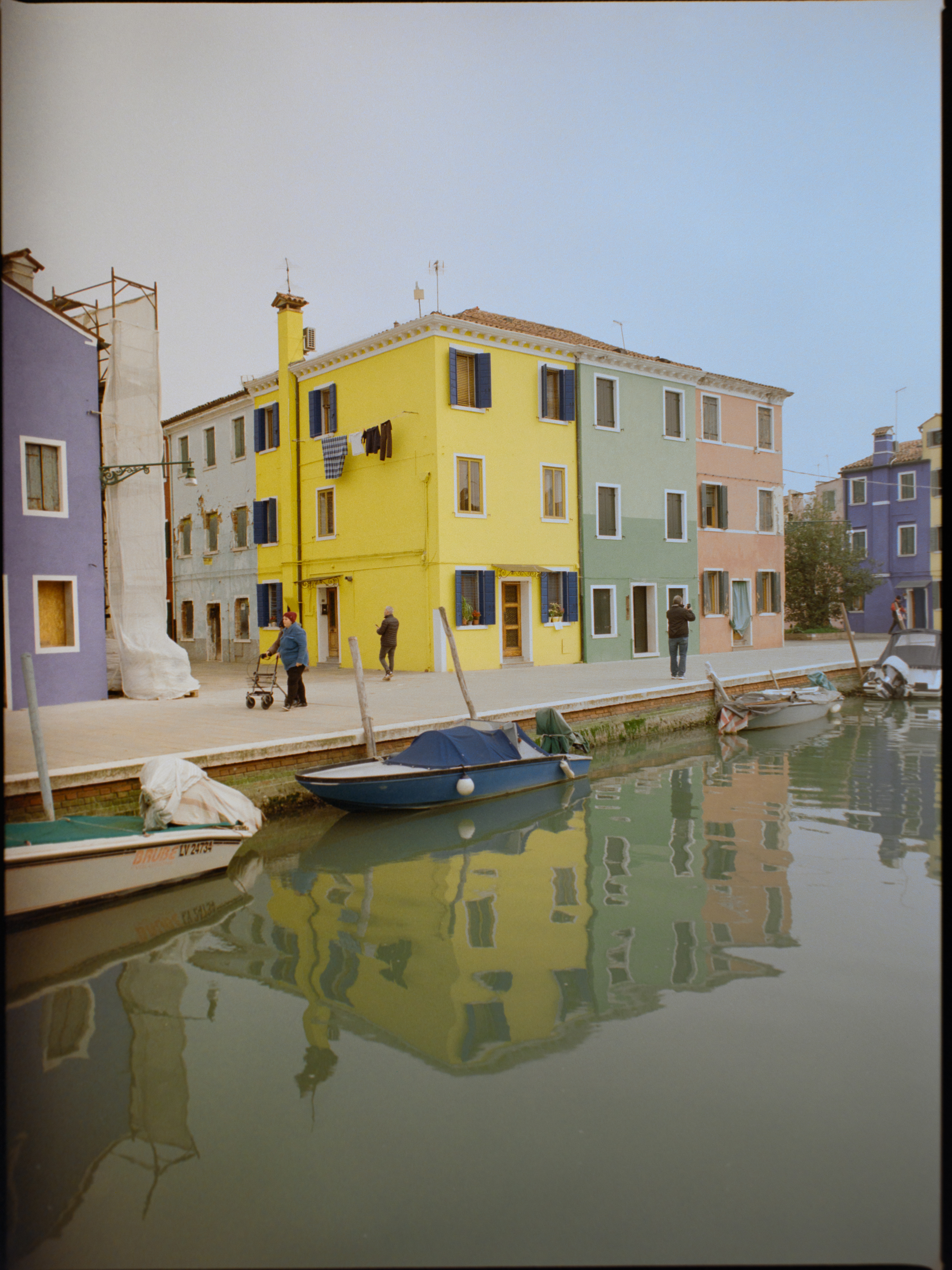
We took the vaporetto out to Burano for the day — about forty-five minutes across the lagoon. It’s the kind of place that photographs itself: every house is painted a different colour, the canals are lined with fishing boats, and the whole island feels like it was designed for a camera. I shot a roll there, but honestly, the film didn’t come out as well as I’d hoped. I’m not sure if it was the light that day or something in the processing, but the colours feel flatter than they should. Still, a few frames held up — the colour blocking of Burano is hard to get wrong, even on a bad day.
Six rolls is ninety exposures — I’ve shared forty-five here. A city that still manages to surprise me on the fourth visit. The gondolieri portraits are something I want to come back to — what started as a casual impulse became the thread I was most excited about by the end of the trip. There’s a series in there, and Venice is a city worth returning to for it. For now, these are the frames — shot on film, with the family, in one of the most photographed cities in the world, and somehow it still felt like there was something new to find around every corner.
Shot on Mamiya 645 & Fujifilm GA645S — Kodak Gold 200, Ektar 100 & Portra 160 — Six Rolls, 45 Frames