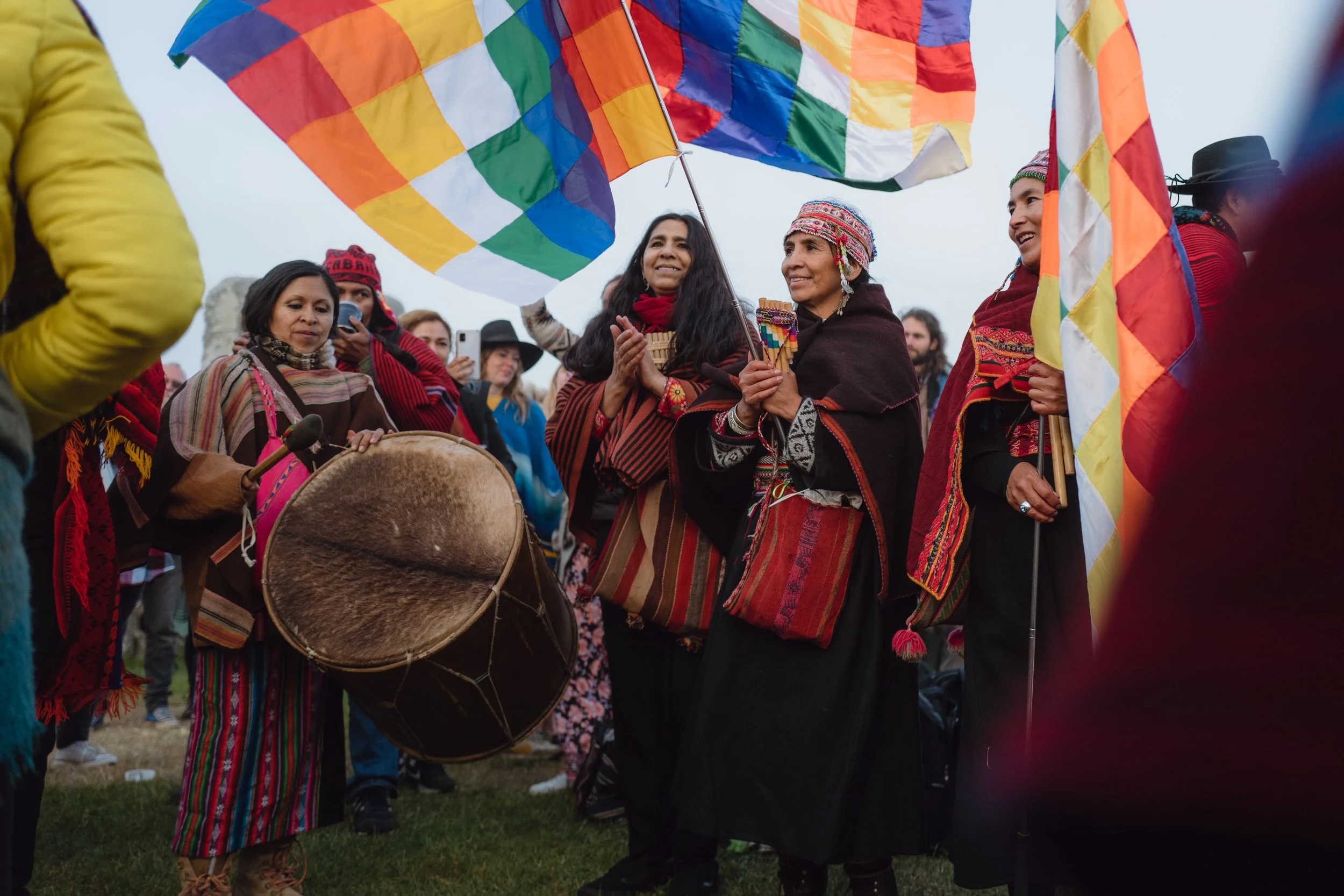
I’d wanted to photograph the Solstice at Stonehenge for years. As someone whose commercial work focuses on lifestyle photography, hotel campaigns, and brand storytelling, personal documentary projects like this serve a different but equally important purpose. They sharpen your instincts, train you to read light in unpredictable conditions, and remind you how to tell a story through a sequence of images rather than a single frame.
The atmosphere is unlike anything else. People arrive from every background—druids in ceremonial robes, families with picnic blankets, backpackers from the nearby festival circuit, locals who’ve been coming for decades. As the sun begins its descent, the crowd gradually draws inward, pressing closer to the stones. The light shifts from golden hour warmth into something deeper—amber, then copper, then a thin blue line on the horizon. It’s the kind of natural light that makes a photographer’s heart race.
The Setting of the Sun


As night falls, the energy changes. Fires are lit in the surrounding fields, drums begin, and the crowd settles into the strange, communal patience of waiting for dawn. For a photographer working in available light, this is where the real challenge begins. Shooting in near-darkness, relying on firelight and the glow of a sky that never quite turns fully black at midsummer, forces you to slow down and commit to each frame. There’s no room for hesitation—you read the scene, find your composition, and trust the exposure.
These are the conditions that separate documentary photography from more controlled genres. You can’t direct the light, can’t ask thousands of strangers to hold still, and can’t predict the moments that matter. What you can do is stay present, move through the crowd, and let the story unfold around you. Some of my favourite images from the night came from simply standing still and watching—silhouettes against firelight, faces lit by phone screens, the ancient stones looming dark against the last traces of twilight.
The Rising of the Sun
And then the sky begins to lighten. Around 4am, the first pale wash of colour appears on the eastern horizon and the crowd stirs. People who’ve been sleeping in the grass stand up, wrap blankets around their shoulders, and turn to face the Heel Stone—the ancient marker that aligns with the midsummer sunrise. The anticipation is palpable. When the sun finally breaks through, the cheer that goes up is genuinely moving—thousands of voices welcoming the longest day.
For me, the sunrise was where the best images came. The light at dawn on the Salisbury Plain is extraordinary—soft, warm, and directional, cutting through the gaps between the standing stones and catching faces in the crowd. It’s the kind of golden hour light that commercial photographers spend entire careers chasing, and here it was, pouring through a 5,000-year-old monument. The images from these moments needed very little editing. When the light is that good, you just have to be in the right place.