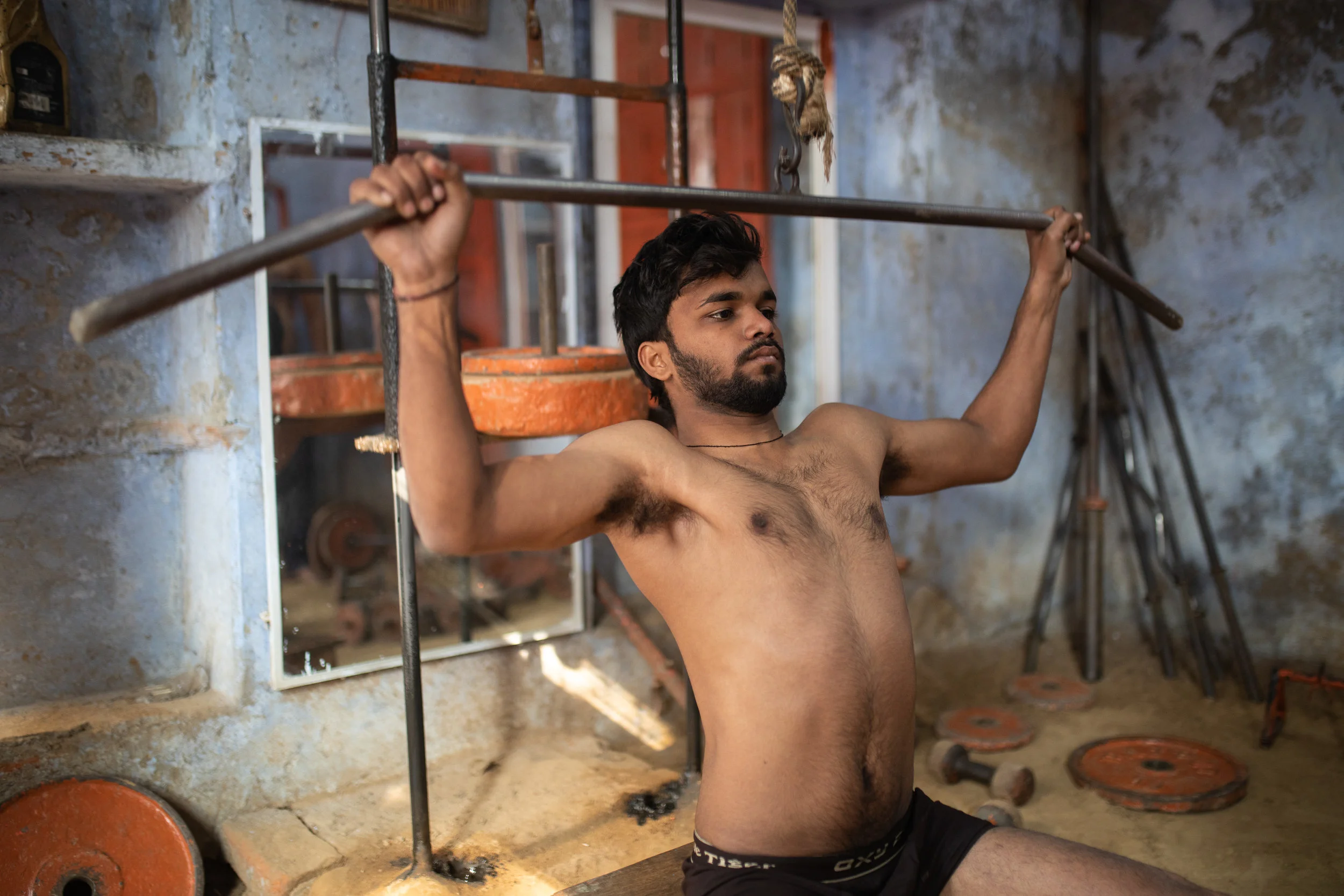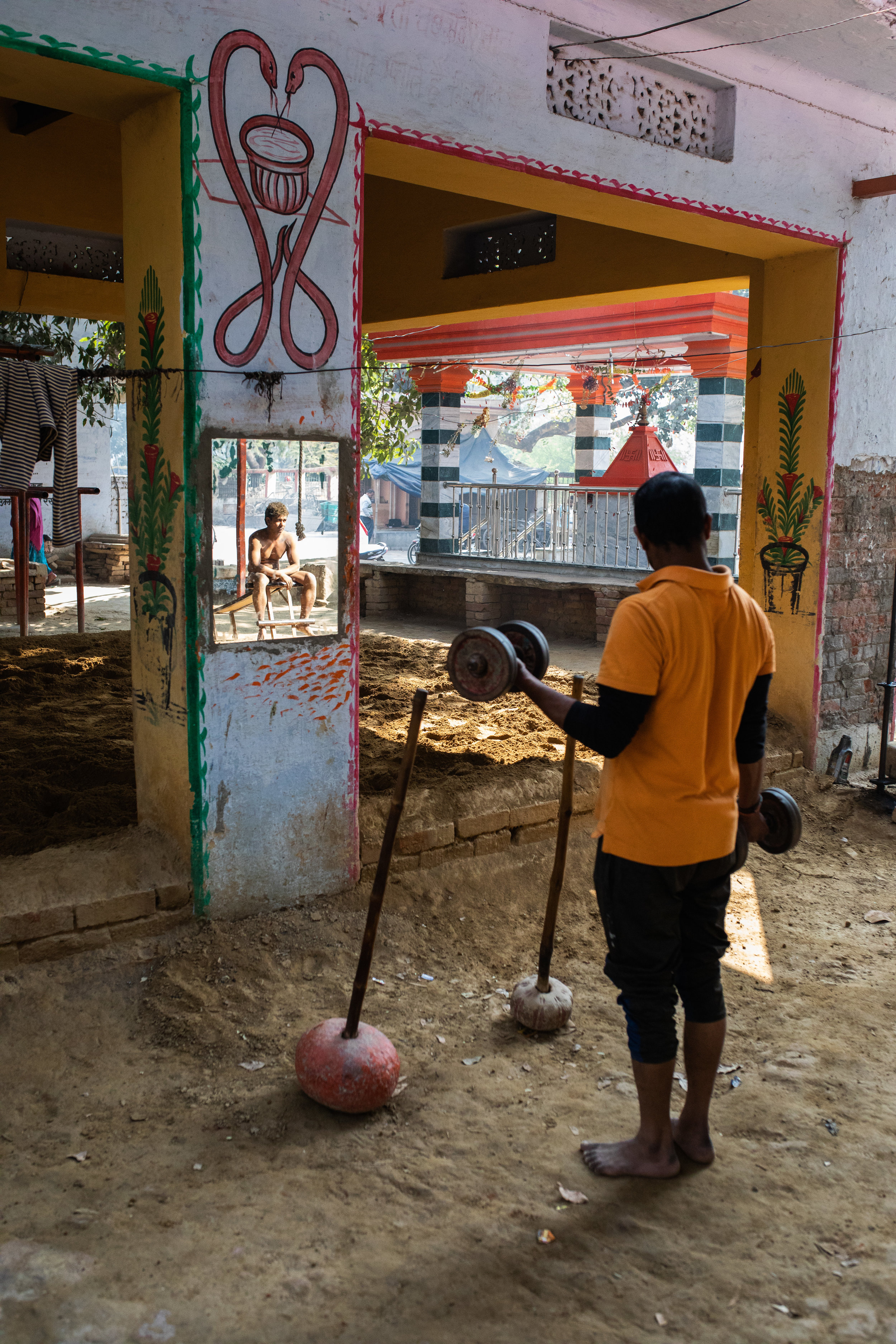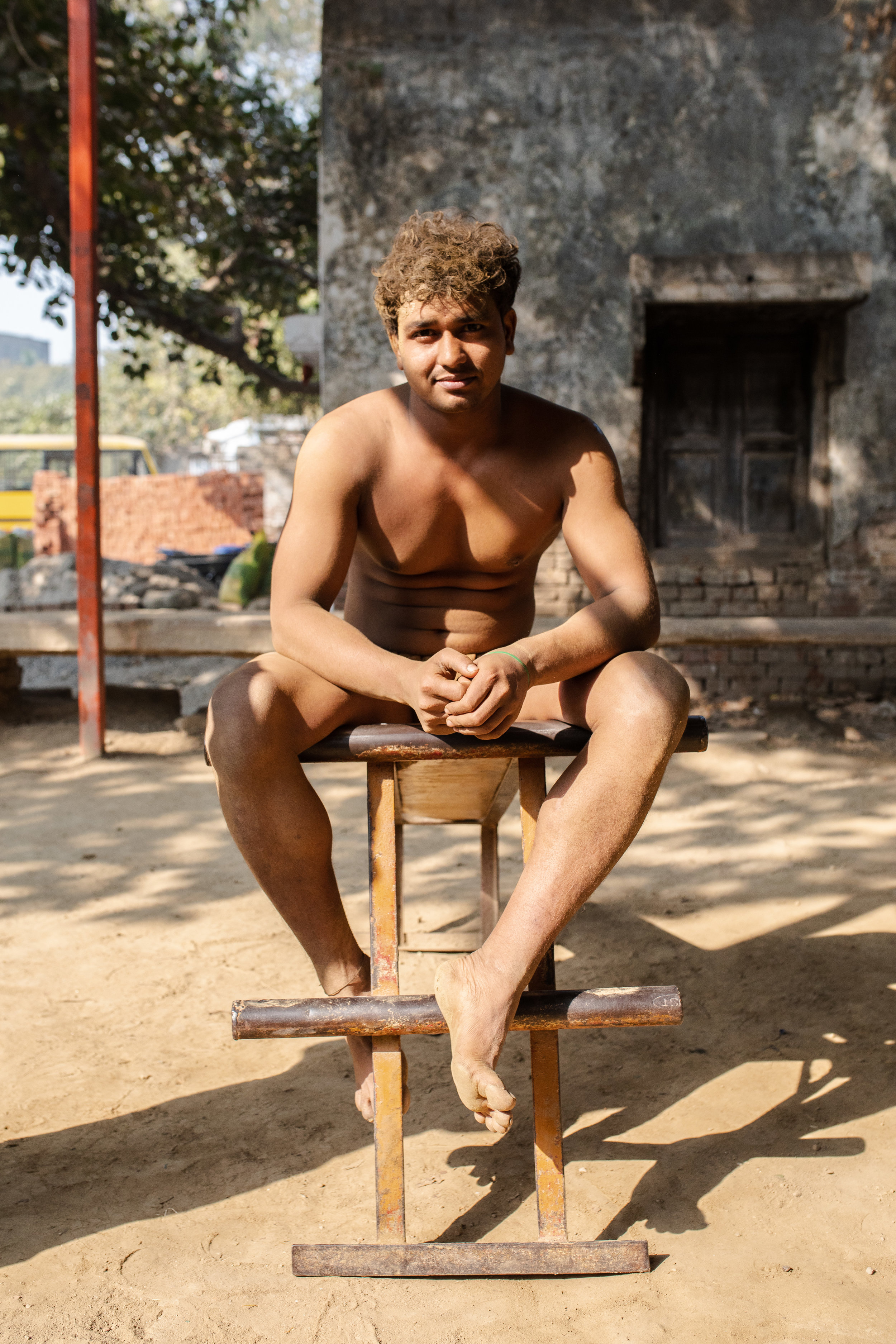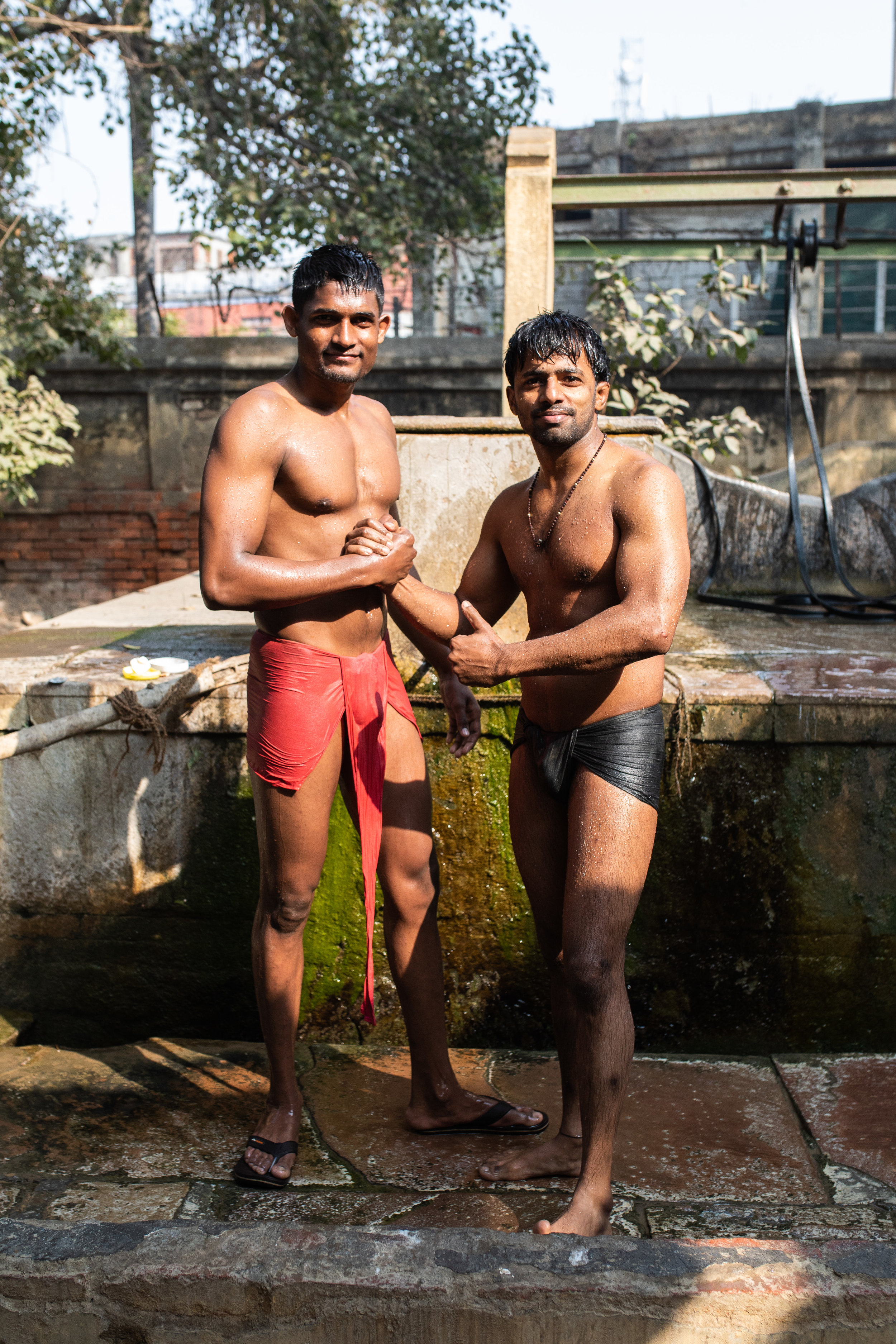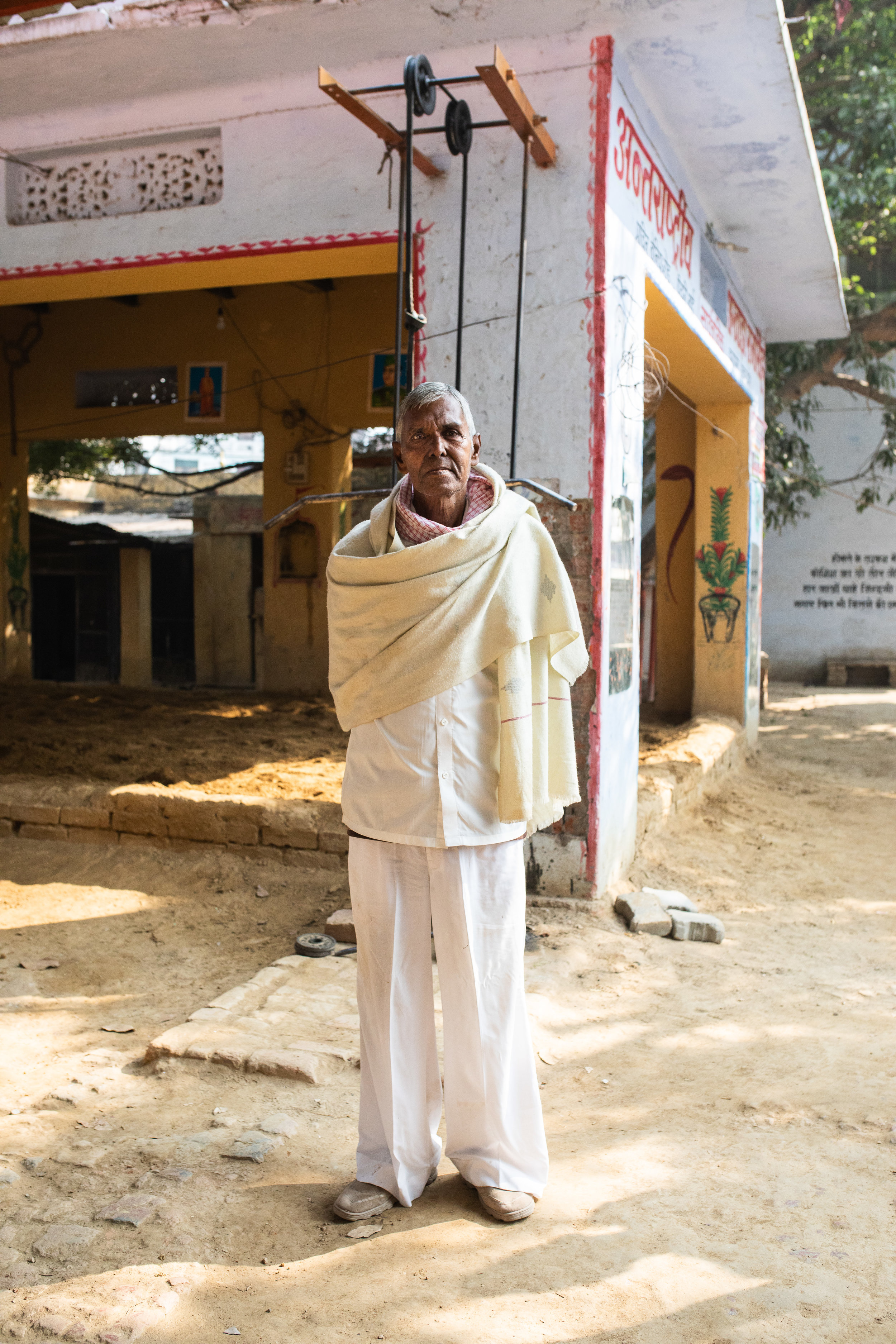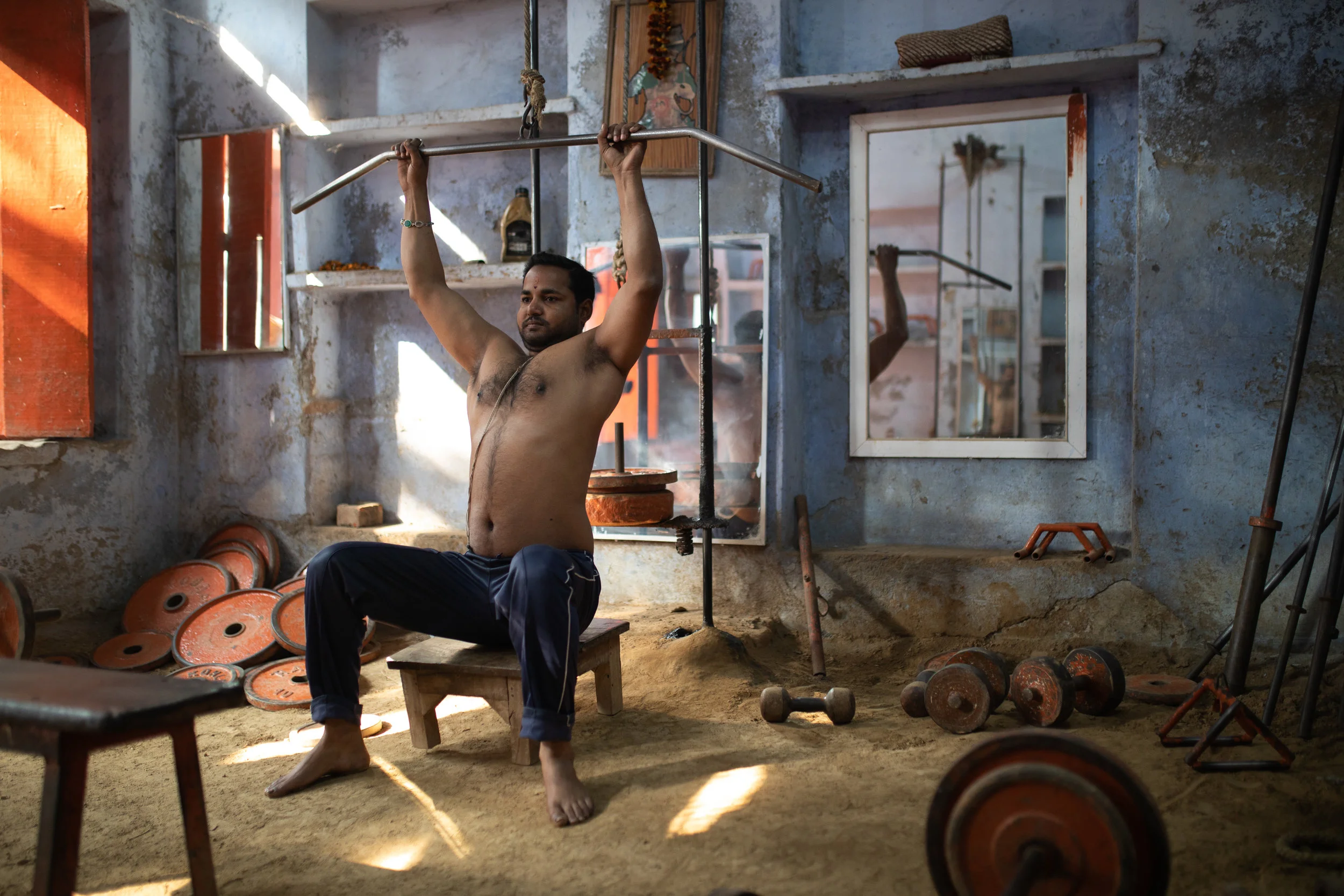
Kushti is one of the oldest forms of wrestling on earth. Its roots stretch back thousands of years to the Mughal era, though the tradition itself draws on even older Hindu wrestling practices described in ancient texts. The word kushti comes from the Persian for wrestling, a reminder of the cultural fusion that shaped the sport during centuries of Mughal rule across the Indian subcontinent. Wrestlers—known as pehlwans—train and compete in akharas: open-air gyms built around a pit of soft red earth mixed with turmeric, mustard oil, and other ingredients believed to have healing properties. The earth is sacred. Before each session it is turned by hand, a ritual in itself.
In cities like Varanasi, Kolhapur, and parts of Uttar Pradesh and Maharashtra, kushti remains deeply woven into the fabric of daily life. The akhara is more than a gym—it is a spiritual institution. Pehlwans follow strict codes of discipline that govern every aspect of their existence: celibacy, vegetarian diet, early rising, and total devotion to physical conditioning. Many live communally at the akhara, sleeping on the floor and eating together. The guru—the head coach—holds the same reverence as a religious teacher. Training begins before dawn and is gruelling: thousands of squats, push-ups performed on stone weights, rope climbing, and hours of sparring in the pit. There is no modern equipment. Everything is built around the body and the earth.

What makes kushti culturally significant is the way it resists the pull of modernisation. In a country that has embraced cricket, Olympic-style wrestling, and global sport with open arms, kushti persists as something deliberately unchanged. It is a living link to a pre-colonial way of life—a physical practice inseparable from Hindu and Sufi spiritual traditions. The akhara sits at the intersection of faith, community, and identity. For many young men in Varanasi, it offers structure, purpose, and belonging in a city where opportunity can be scarce. It is also a source of deep local pride. Neighbourhoods rally around their akharas and their champions. Bouts draw crowds, and victories are celebrated with the fervour of any major sporting event.
Yet kushti is under pressure. Urbanisation is swallowing the open land that akharas depend on. Younger generations are increasingly drawn to careers that offer financial security rather than the ascetic life of a pehlwan. Government support is inconsistent, and the sport receives a fraction of the funding directed toward Olympic disciplines. Some akharas have closed. Others survive on the dedication of ageing gurus and a handful of committed wrestlers. But in Varanasi—a city that has always moved at its own pace, answering to traditions older than most nations—the akharas endure. Each morning, wrestlers still rise before the sun, still turn the earth, still oil their bodies and step into the pit. It is a quiet, powerful act of cultural preservation, played out in dust and sweat and silence.